
It started with one strawberry plant that kept dying
It was a June morning in 2015, and the soil in that raised bed was still too wet. I’d planted a June-bearing strawberry, the kind that promises a summer of fruit, but the roots were rotting before they could take hold.
The leaves curled inward, then blackened at the edges—classic overwatering, but the moisture meter said the soil was ‘ideal.’
I replanted it twice that first season, each time adjusting the drainage, each time convinced I’d finally gotten it right. The second attempt lasted three weeks before the same thing happened: the soil looked perfect, but the roots suffocated anyway.
The third time, I even mixed in perlite, thinking finer particles would fix it.
It wasn’t until the fourth try—when I stopped measuring and just dug deeper—that I noticed the real problem. The bed’s bottom layer was compacted clay, invisible until I broke through it.
The water pooled there, unseen, while the top soil stayed ‘happy.’ That’s when I realised: the tools I trusted (meters, charts, even my own hands) couldn’t see what the plant already knew.
Nine tries before it worked
The fifth strawberry died the same way. The sixth made it to August before wilting. By the seventh attempt, I’d stopped buying new plants and instead salvaged a struggling one from a neighbour’s compost heap—its roots gnarled but alive.
This time, I didn’t just add perlite; I replaced the bottom 6 inches of soil entirely, breaking up the clay with a pickaxe until the bed’s walls were lined with coarse sand.
The eighth try lasted two months before I realised I’d overdone it. The sand leached nutrients too fast, and the plant’s leaves turned yellow. That’s when I switched to a 50-50 mix of compost and coconut coir, holding moisture without drowning the roots.
The ninth plant—still the same variety, still June-bearing—finally took. It fruited in July, small but firm, and by September had sent out runners.
What I didn’t account for was the bed’s *memory*. Even after fixing the drainage, the old compaction left a shadow. The roots grew around it, not through it, and the first harvest was sparse. It took a full year of side-dressing with worm castings to break the pattern.
But by then, I’d stopped thinking of it as a failure. I was learning how to listen.
The mind behind these pages

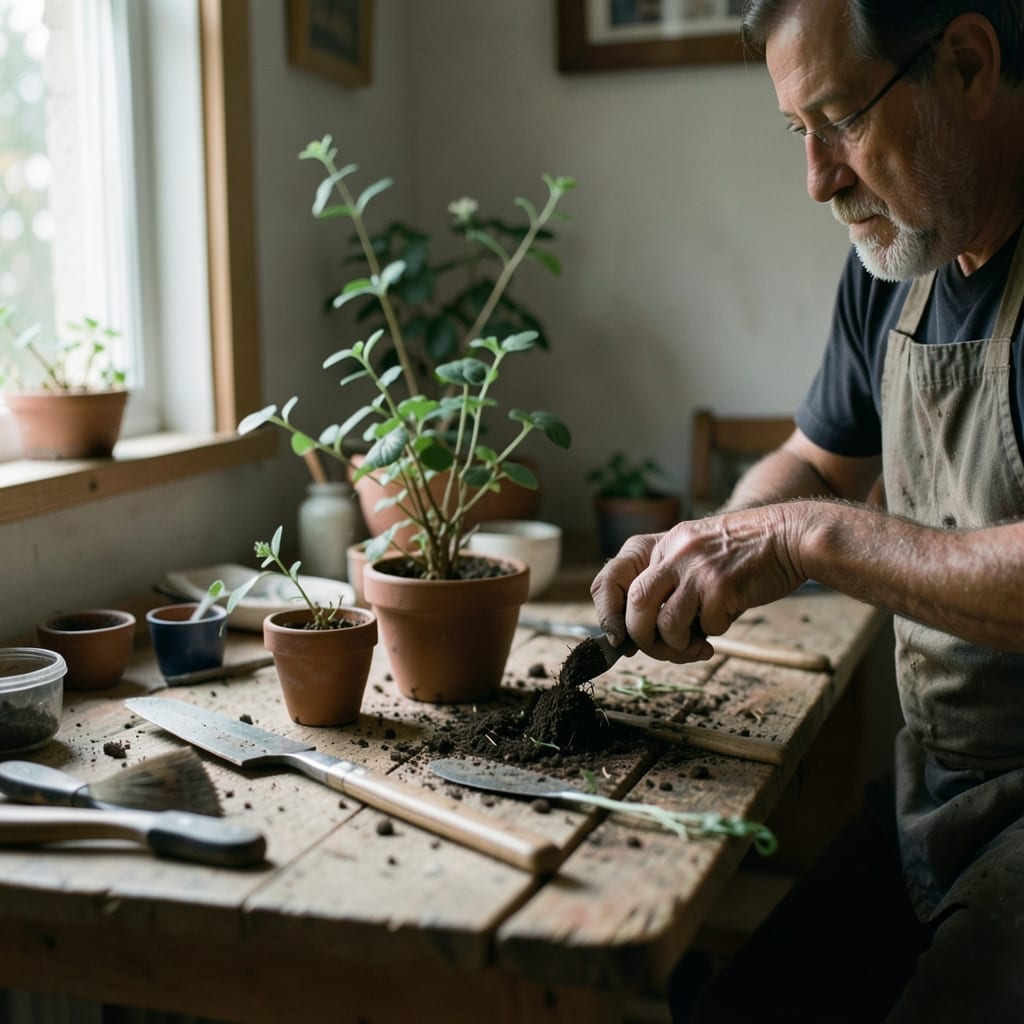
That’s me—Angelo Northrup—still digging up beds that don’t behave. I’m the one who spent three winters convinced my compost heap was ‘done,’ only to pull out a half-rotted tomato stem in spring.
My grandmother called it ‘obstinate curiosity’; my neighbours call it ‘why you always have a shovel in your car.’
I’m the kind of person who keeps a notebook by the sink, scribbling down why a zucchini blossom wilted or how long it took for a basil cutting to root in January.
It’s a habit that costs me time (I once spent an hour debating the best way to label seed packets) and money (that strawberry reset cost me $80 in soil alone).
But it’s also how I recognise other gardeners: the ones who pause to watch a slug’s path or who email photos of their ‘ugly’ harvests.
I don’t cook. Never have. My idea of a culinary triumph is a properly steeped cup of tea.
What I do know is how to coax life from stubborn soil, how to turn a weed-choked corner into a bed that hums with bees, and how to accept that some years, the tomatoes will split anyway.
That strawberry is still growing. I haven’t harvested from it in years—it’s too tangled with its runners—but I check on it every spring, like an old friend. It’s a reminder that gardening isn’t about perfection. It’s about the things that keep trying, even when you don’t.
Everything here is written the way that strawberry was
This site’s bed plans aren’t just lists of dimensions or plant spacing. They’re the result of the same trial-and-error that strawberry taught me: what looks right on paper (a 4x8 bed, 12 inches of soil) often fails in practice.
The ‘notes’ section in every plan includes the things that *didn’t* work—the bed that cracked after one rain, the herbs that choked the carrots, the time I forgot to account for a south-facing wall’s heat.
I write the first draft while the bed is still being built. If a row of peas keeps collapsing under their own weight, I’ll note it in the margins before the ink dries.
Months later, that margin note becomes the warning about ‘staking early’ or the tip to ‘plant in a slight trench.’ The site’s ‘updated’ dates aren’t just for SEO—they’re proof that even the ‘final’ plans change.
That strawberry’s lesson lives in the ‘revive’ section of every page. You’ll find it under headings like *‘If your soil smells like wet socks’* or *‘When your tomatoes flower but never fruit.’* These aren’t theoretical fixes.
They’re the answers I wished I’d had back in 2015, when the plant was already dead and I was blaming the wrong thing.
What that means for you
You’ll find no ‘foolproof’ plans here—only the ones that survived at least three seasons of real-world testing. If a bed design worked for me in a hot, dry climate, it’ll say so. If it failed in shade, that’s noted too.
And if the ‘experts’ say something works, but my experience says otherwise, you’ll get both—and a note on why they conflict.
What you *won’t* find are perfect photos or step-by-step instructions that assume your soil, light, or tools match mine.
This site is for the gardeners who’ve replanted a seed three times because the first two sprouted in the wrong place, or who’ve stared at a wilting plant and wondered if they’re doing it wrong. (Spoiler: You’re not.)
The strawberry that taught me the most was someone else’s. If you’ve got a bed, a plant, or a season that broke all the rules—and somehow worked—tell me about it. What did the charts say? What did the plant actually need?
The guides are grouped by category: Advice, Aphids, Companion Plants, Container Gardens, Diseases and Fertilization.