
Flowers
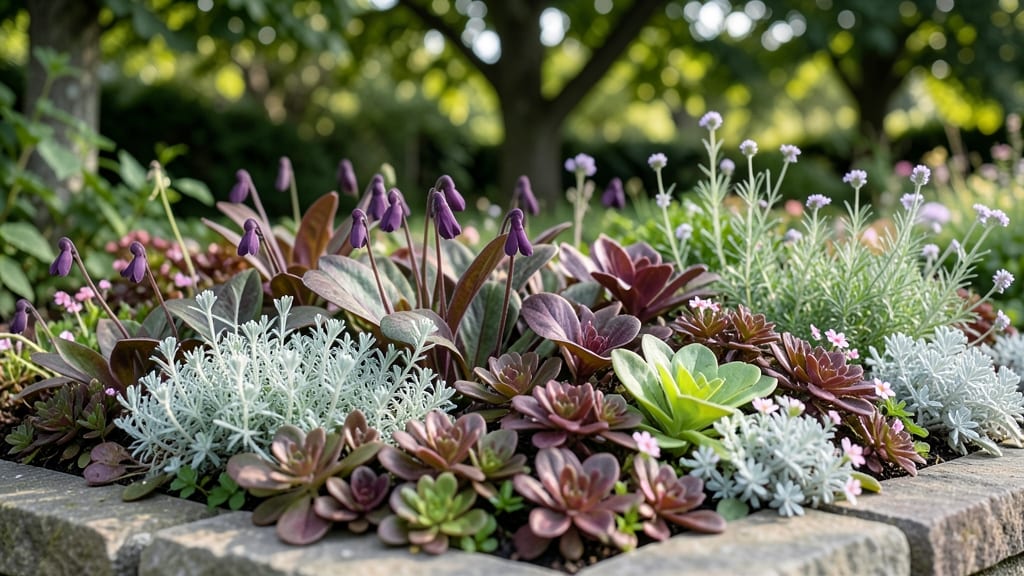
Creating effective flower bed coverage means arranging plants in three distinct height layers—tall perennials or shrubs at the back, mid-height blooms in the center, and low-spreading ground covers or annuals in front—to maximize visual impact and reduce maintenance.
This layering technique isn't just about looks—it creates a natural progression that draws the eye while minimizing weed growth and soil erosion. Tall plants like coneflowers or ornamental grasses form the backbone, mid-height options such as lavender or salvia add seasonal color, and low-growing varieties like creeping thyme or ajuga fill gaps and suppress weeds. 🌿 The key is balancing evergreens with seasonal bloomers so your bed stays vibrant year-round, even when some plants go dormant.
For best results, I recommend starting with your tallest plants against a fence or wall, then working forward with each subsequent layer. This creates that satisfying "wow" factor from any viewing angle. Plus, the varying textures—smooth leaves, feathery foliage, or spiky blooms—add depth that single-height plantings simply can't match.
💡 In This Article
- Designing Flower Bed Height Zones for Seasonal Balance
- Best Low-Maintenance Ground Covers for Flower Beds
Designing flower bed height zones for seasonal balance
The science behind effective flower bed layering lies in how our eyes perceive depth and movement. When you arrange plants in three distinct height zones—background, midground, and foreground—you create what designers call "visual progression."
Our brains automatically scan from tallest to shortest elements, which makes a garden feel more dynamic than flat plantings.
For example, a 6-foot ornamental grass at the back (like Miscanthus sinensis) paired with 3-foot salvia in the middle and 6-inch creeping thyme in front creates this illusion of depth that flat landscapes lack.
Seasonal balance comes from mixing evergreen and deciduous plants with staggered bloom times. Evergreens like boxwood (3-4 feet) or heuchera (1-2 feet) provide year-round structure, while deciduous plants like coneflowers (2-3 feet) or black-eyed Susans (3-4 feet) offer seasonal color.
The trick is to have at least one plant blooming every 3-4 weeks from spring to fall.
For instance, tulips (6-12 inches) kick off spring, followed by peonies (2-3 feet) in late spring, then daylilies (1-2 feet) through summer, and finally asters (2-3 feet) in fall. This creates continuous visual interest.
Foliage texture plays an equally important role as height and bloom time. Contrast smooth leaves with spiky ones—like pairing hosta (1-2 feet, broad leaves) with ornamental grasses (2-5 feet, feathery plumes). This texture variation adds dimension that height alone can't achieve.
Another pro tip: Use plants with vertical interest (like delphiniums or hollyhocks) in the midground to draw the eye upward, while low-growing spreaders (like ajuga or sedum) in the front create a soft, inviting base. The result is a garden that feels lush and intentional from every angle.
Climate considerations can't be overlooked when designing these zones. In cooler regions, focus on hardy perennials that thrive in USDA Zones 3-5, like Russian sage (4-5 feet) or catmint (2-3 feet).
In warmer climates (Zones 8-10), opt for heat-tolerant plants like lantana (1-3 feet) or salvia (2-4 feet). The key is selecting plants that naturally thrive in your zone's temperature extremes, as stressed plants won't provide the visual impact you're aiming for.
For example, a 6-foot hydrangea might struggle in Zone 4 winters, while a 3-foot lavender would thrive where a 4-foot rose might succumb to heat stress.
Don't underestimate the power of color placement in these height zones either. Use your tallest plants as "backdrops" for bold colors (like deep purples or reds), mid-height plants for secondary colors (yellows, oranges), and foreground plants for subtle neutrals (whites, creams, grays).
This creates a natural color gradient that guides the viewer's eye through the space. For instance, pairing a 5-foot purple bearded iris at the back with 3-foot yellow coreopsis in the middle and 6-inch white ajuga in front creates a visually satisfying progression that feels intentional rather than random.
One common mistake is overcrowding the midground layer, which can make the bed feel cluttered. Aim for 30-40% coverage in each zone to allow plants room to grow and air to circulate. This spacing also prevents diseases that thrive in overly dense plantings.
For example, if you're using 3-foot salvia in the midground, space them 18-24 inches apart to give them room while still maintaining that layered look. The same principle applies to foreground plants—creeping thyme should be spaced 12-18 inches apart to allow for full spread without competing with taller plants.
Finally, consider adding structural elements like trellises or obelisks to your tallest plants (like clematis or morning glories) to create vertical interest that extends beyond natural plant heights. These elements can add 5-10 feet of vertical space to your design, making your flower bed feel even more dynamic.
The key is to place these structures strategically—often at the back center of the bed—to draw the eye toward the focal point while maintaining the layered effect from all viewing angles. 🌸