
Landscaping
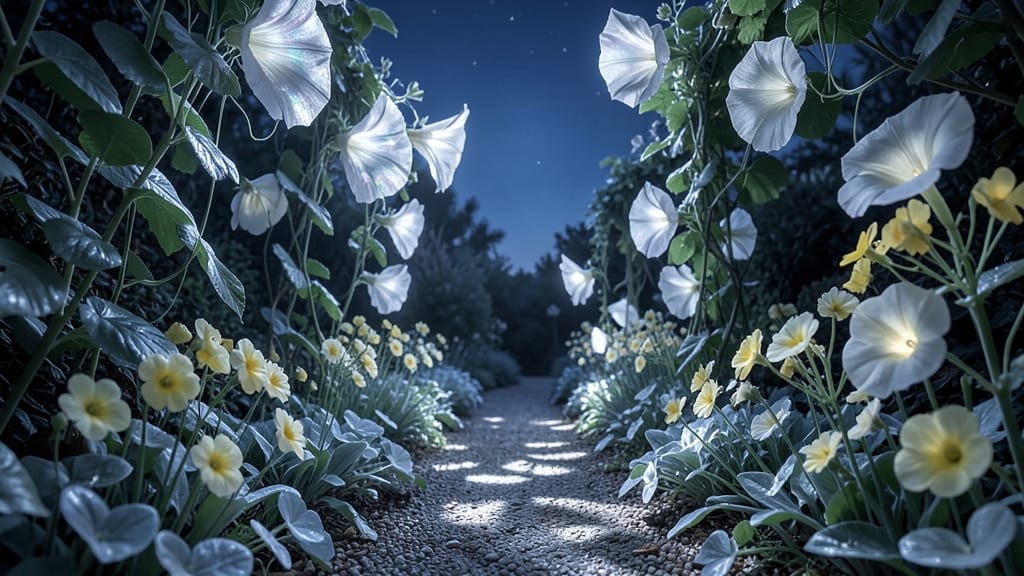
Transform your garden with these 10 flower bed walkway ideas that blend beauty and function. Whether you're creating a cozy cottage path or a modern geometric design, these pathways elevate your outdoor space with seasonal color and timeless charm.
Classic Herbaceous Perennial Border Walkway
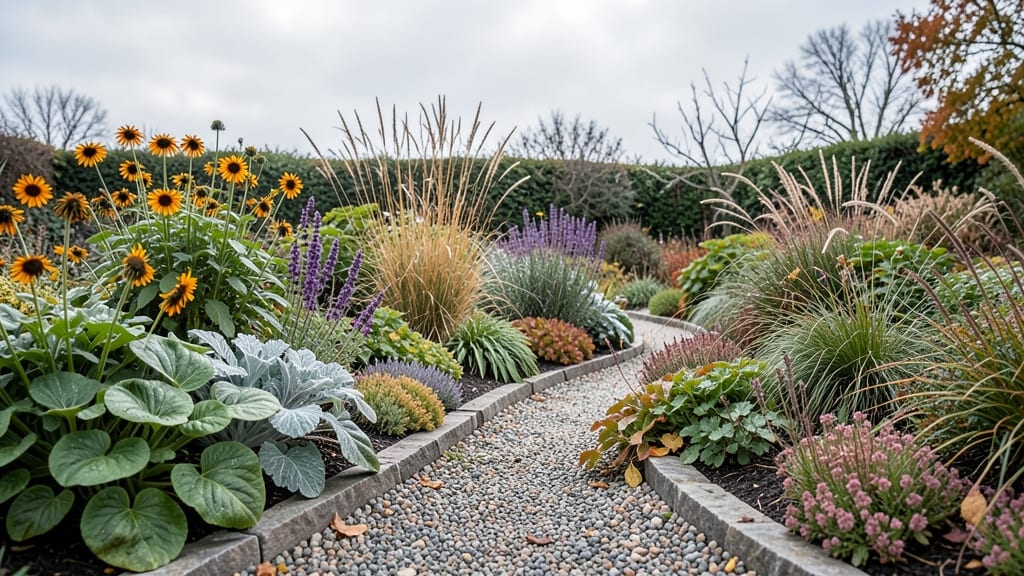
Tired of seasonal flower beds that demand constant attention? A classic herbaceous perennial border walkway offers effortless elegance with plants that return every year—no replanting required. This design thrives on minimal maintenance while delivering year-round structure and seasonal color shifts.
Start with drought-tolerant stars like lavender (fragrant and deer-resistant), salvia (tall spikes in purple or blue), and catmint (silvery foliage with blooms that attract bees). Plant them in sunny borders (at least 6 hours of sun) along a gravel or stepping-stone path for a polished look. Mulch with wood chips to suppress weeds and retain moisture, and prune back spent blooms in early spring to encourage fresh growth.
Perfect for busy gardeners or those who love low-fuss landscapes, this walkway matures beautifully over time, offering four-season interest with minimal effort. The scent alone from lavender will make your garden feel like a retreat. ✨
Rustic Gravel Path with Wildflower Plantings
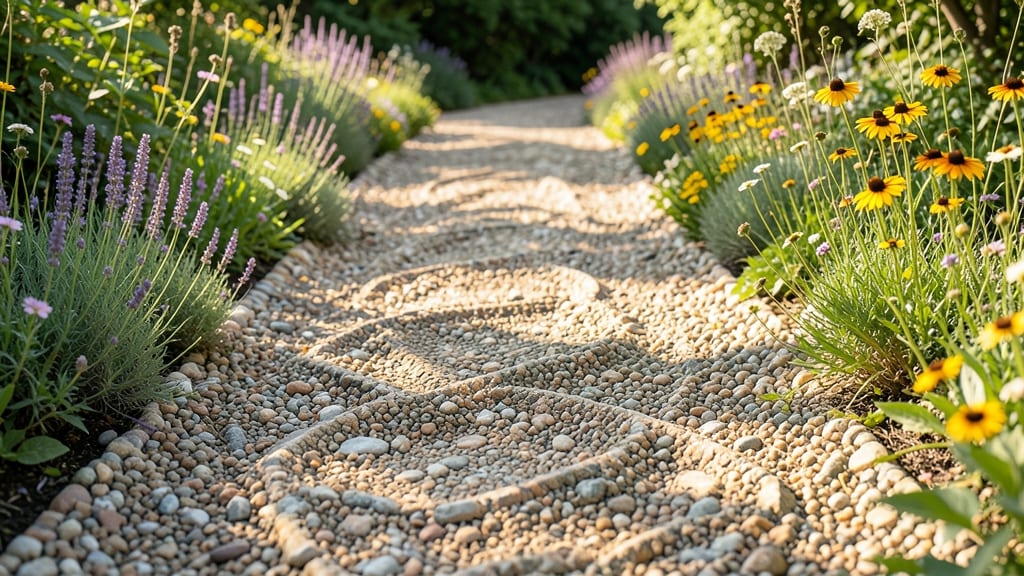
Skip the high-maintenance mulch and opt for a rustic gravel path that doubles as a pollinator paradise. This design lets rainwater drain naturally while creating a charming, low-effort walkway that thrives on neglect—perfect for busy gardeners or drought-prone areas.
Start by laying 3-4 inches of compacted gravel (like decomposed granite) for stability, then edge it with landscape fabric to prevent weeds. Plant native wildflowers like black-eyed Susans, cone flowers, and coreopsis along the sides—they’ll self-seed, attract bees and butterflies, and bloom from early summer through fall. For extra texture, mix in purple coneflowers and goldenrod for seasonal color shifts.
This path requires zero weekly upkeep beyond occasional weed pulling (which is minimal thanks to the gravel) and occasional gravel top-ups. It’s ideal for urban gardeners with poor soil or those who want to reduce water usage while supporting local ecosystems. 🌻
Geometric Boxwood Hedge Walkway with Annuals

Craving a garden that looks like it belongs in a historic estate? A geometric boxwood hedge walkway delivers that polished, timeless appeal with minimal fuss. The key lies in the crisp, structured boxwood hedges that frame your path like a living border—think perfectly manicured rectangles or curves guiding you through the garden.
Plant boxwoods in a grid pattern along your pathway, spacing them 18-24 inches apart for a dense, uniform look. Pair them with annuals like impatiens (for shade) or geraniums (for sun) that spill over the edges, adding vibrant pops of color. Prune boxwoods twice a year—once in late spring and again in early fall—to maintain their shape and encourage bushy growth.
This design is perfect for homeowners who love symmetry and structure, or those with formal garden aesthetics. It’s also beginner-friendly since boxwoods are drought-tolerant once established. 🌿
Woodland Shade Path with Ferns and Hostas
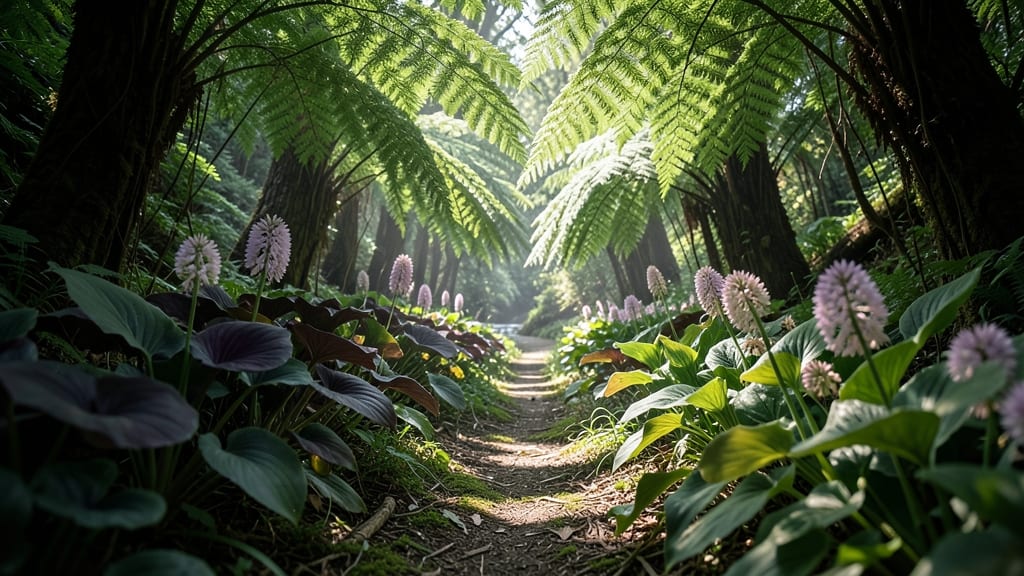
Step into a serene woodland retreat with a woodland shade path that transforms your darkest garden corners into a lush, dreamy escape. This design thrives where sunlight barely touches the ground, using ferns, hostas, and astilbes to create a magical green tunnel that feels like a fairy-tale walk.
Start with moss-covered stepping stones or natural wood slats for the path, then layer in evergreen ferns like maidenhair or autumn fern for year-round texture. Pair them with hostas in shades of blue, gold, or variegated green for bold foliage contrast, and add astilbe plumes in soft pink or white for delicate summer blooms. Mulch with shredded bark to suppress weeds and retain moisture in the shady conditions.
This design is perfect for gardeners with shady yards or those who love a low-maintenance, high-impact look. The dappled sunlight filtering through overhead branches creates a dynamic, ever-changing display that feels alive and inviting. 🌿
Tropical Butterfly Garden Walkway
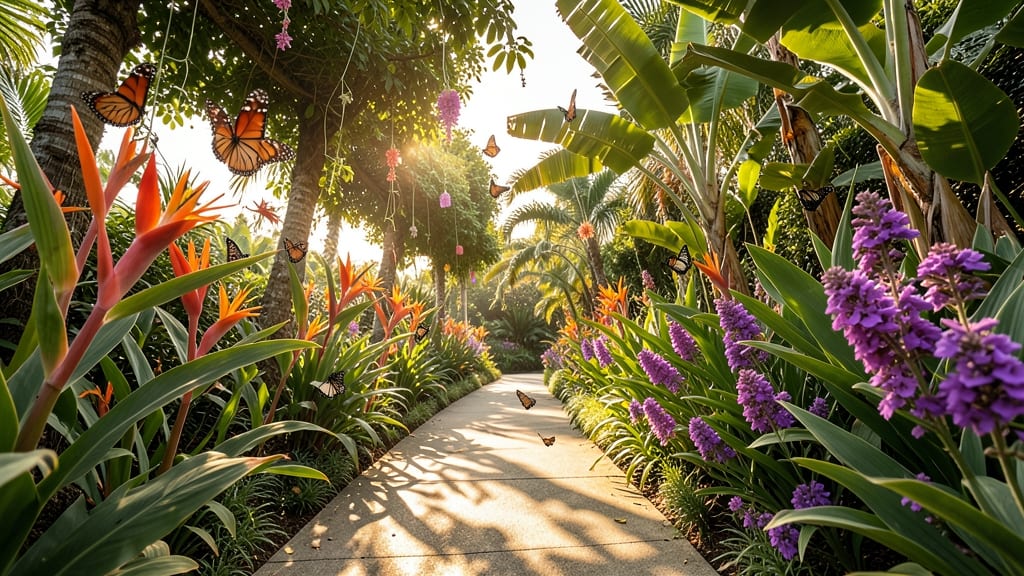
Turn your garden into a vibrant butterfly haven with a tropical butterfly garden walkway that doubles as a pollinator paradise. This sun-drenched design thrives in warm climates and transforms your path into a fluttering, colorful corridor where monarchs and swallowtails flit among the blooms.
Plant milkweed (the monarch caterpillar's host plant) along one side, pair it with butterfly bush for its fragrant purple blooms, and add lantana for its nectar-rich clusters that attract a rainbow of winged visitors. Space plants 18-24 inches apart for easy access while maintaining a lush, layered look. Mulch with pine bark to retain moisture and deter weeds—critical in hot, dry conditions.
This walkway isn’t just beautiful; it’s a lifeline for declining pollinator populations. Perfect for gardeners in USDA zones 8-11 or those who want to support local ecosystems, it turns every stroll into a living wildlife documentary. 🌻
Stepping Stone Path with Cottage Garden Flowers
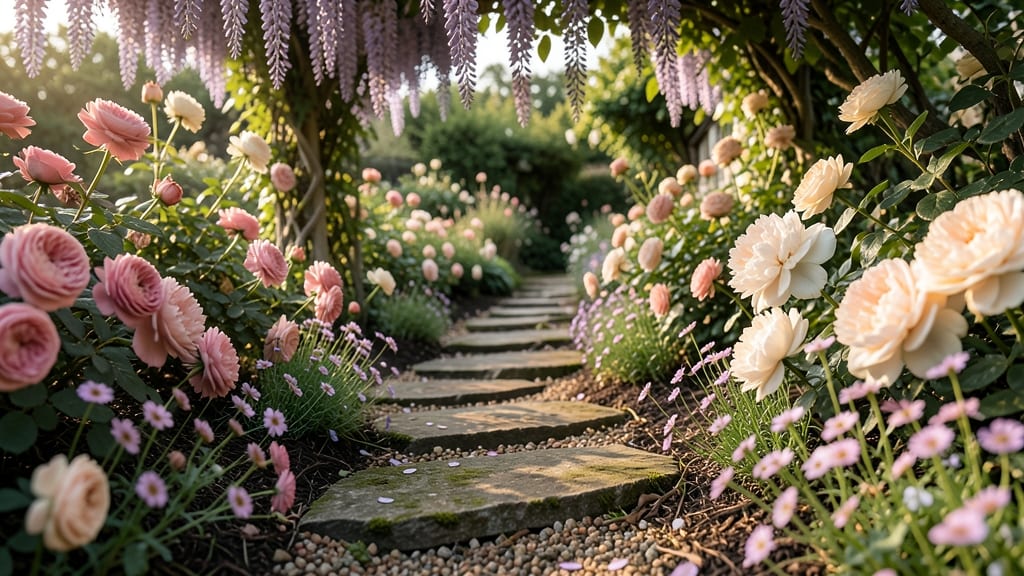
Bring back the charm of old-world gardens with a stepping stone path surrounded by fragrant roses, lush peonies, and delicate sweet william. This DIY-friendly design creates a romantic, nostalgic feel that’s perfect for small yards or cottage-style gardens where you want to stroll through a sea of blooms.
Start by laying flat, durable stepping stones (concrete, slate, or natural stone) in a winding pattern, spaced about 12-18 inches apart for easy walking. Plant climbing roses along the edges for vertical interest, while peonies and sweet william fill the gaps between stones with bold color. Mulch with straw or bark to suppress weeds and retain moisture—ideal for full-sun areas with well-drained soil.
This design is especially magical for gardeners who love seasonal fragrance and a touch of whimsy. It’s also beginner-friendly, requiring minimal tools and offering big rewards with low upkeep once established. 🌷
Modern Minimalist Walkway with Monochromatic Plants
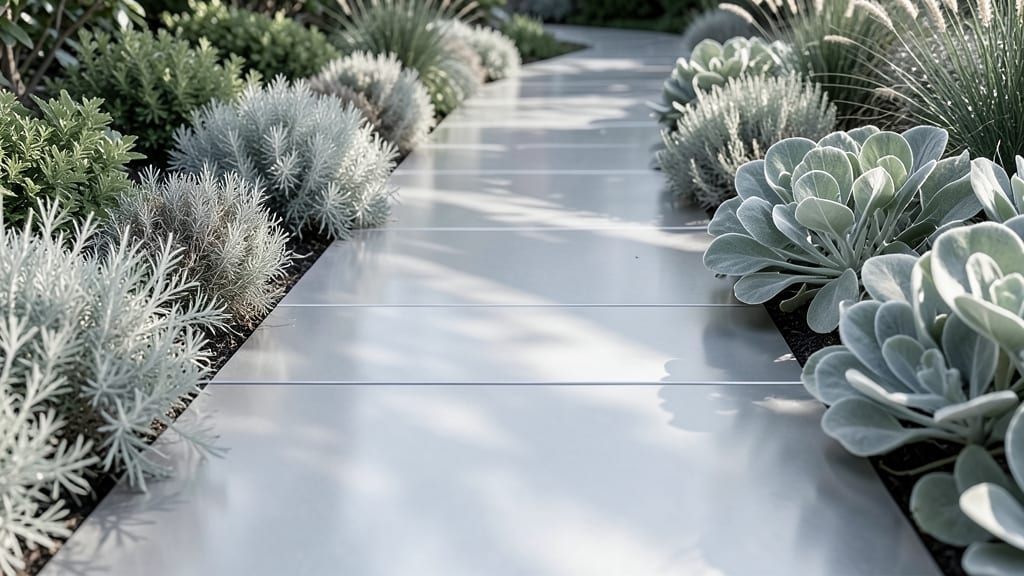
If you crave a sleek, low-fuss garden path that still feels lush and intentional, a monochromatic silver walkway delivers modern elegance with minimal effort. This design relies on the soft, velvety textures of artemisia and lamb’s ear, whose silvery foliage creates a soothing neutral palette that contrasts beautifully with clean concrete or gravel paths.
For best results, plant silver artemisia (like 'Powis Castle') along the edges for height and structure, while lamb’s ear (Stachys byzantina) adds plush ground cover. These drought-tolerant plants thrive in full sun to partial shade and require almost no maintenance—just occasional trimming to keep their shapes tidy. Add a few white blooms like shasta daisies or white alyssum for subtle pops of color.
This look is perfect for urban gardeners or anyone with a contemporary aesthetic who wants a pathway that feels polished yet organic. The monochromatic scheme ensures year-round visual interest without clashing with your home’s exterior. ✨
Seasonal Color-Changing Walkway
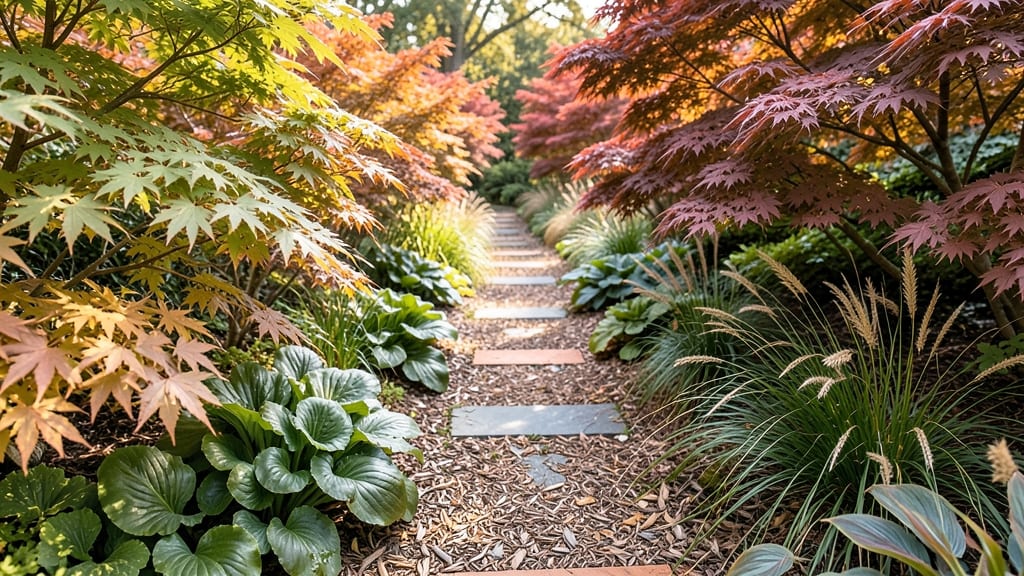
Tired of flower beds that look the same all year? A seasonal color-changing walkway transforms your garden into a living work of art, with foliage that evolves from spring to winter. This design leverages plants like Japanese maples (which blush red in autumn), heuchera (with coppery tones in winter), and ornamental grasses (that glow gold in fall).
Start by planting Japanese maples along the path edges for year-round structure—their delicate leaves shift from green to fiery red. Pair them with heuchera, whose leaves change from lime to deep purple as temperatures drop. Add ornamental grasses like Miscanthus or Pennisetum for movement and texture, their seed heads catching the light in winter. For extra drama, include hydrangeas that bloom in summer and turn papery pink in fall.
This walkway is perfect for gardeners who love variety and don’t want to replant every season. The color shifts create excitement with minimal effort—ideal for small spaces or urban gardens where seasonal interest matters most. 🌟
Edible Flower Pathway with Culinary Herbs
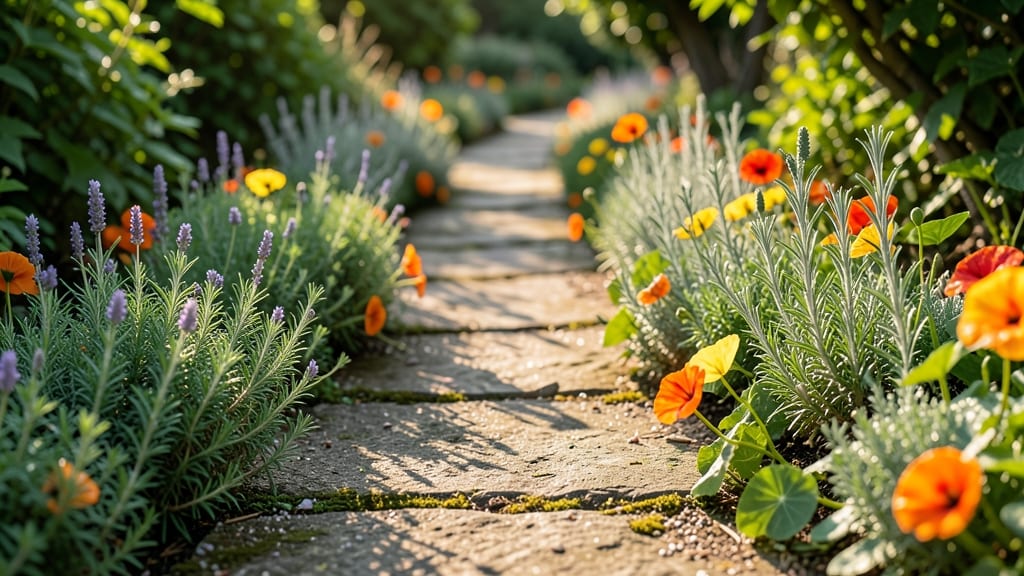
Turn your garden path into a fragrant, edible experience with a culinary herb walkway that doubles as a sensory feast. This design marries the practicality of thyme, rosemary, and nasturtiums—all of which thrive along pathways and offer both beauty and harvestable blooms.
Plant thyme and rosemary in low, spreading mounds along the edges of your path, where their fragrant foliage releases aromas with every step. Tuck nasturtiums in between for their bright orange and red blooms, which are not only edible but also deter pests naturally. These herbs prefer full sun to partial shade and well-draining soil, making them ideal for most climates.
Perfect for urban gardeners, small spaces, or anyone who loves fresh flavors, this pathway ensures you’ll always have herbs within arm’s reach—literally! 🌿
Moon Garden Walkway with Nocturnal Flowers

Transform your evening strolls into a magical experience with a moon garden walkway—a pathway designed to bloom after sunset. This enchanting design features moonflower vine, evening primrose, and white datura, whose fragrant flowers open only at night, creating a glowing, ethereal atmosphere under the stars.
Plant moonflower vine along trellises or fences to create a canopy of large, luminous blooms that close by mid-morning. Pair it with evening primrose, whose delicate white or pale yellow flowers release a sweet scent after dark, and white datura, known for its striking trumpet-shaped blooms that attract moths and hummingbirds. For best results, choose a location with partial shade and well-draining soil, and water deeply once established.
This design is perfect for gardeners who love romance and mystery, or for creating a serene retreat in your backyard. The soft glow of nocturnal blooms will make your walkway feel like a hidden sanctuary. ✨