
Tools
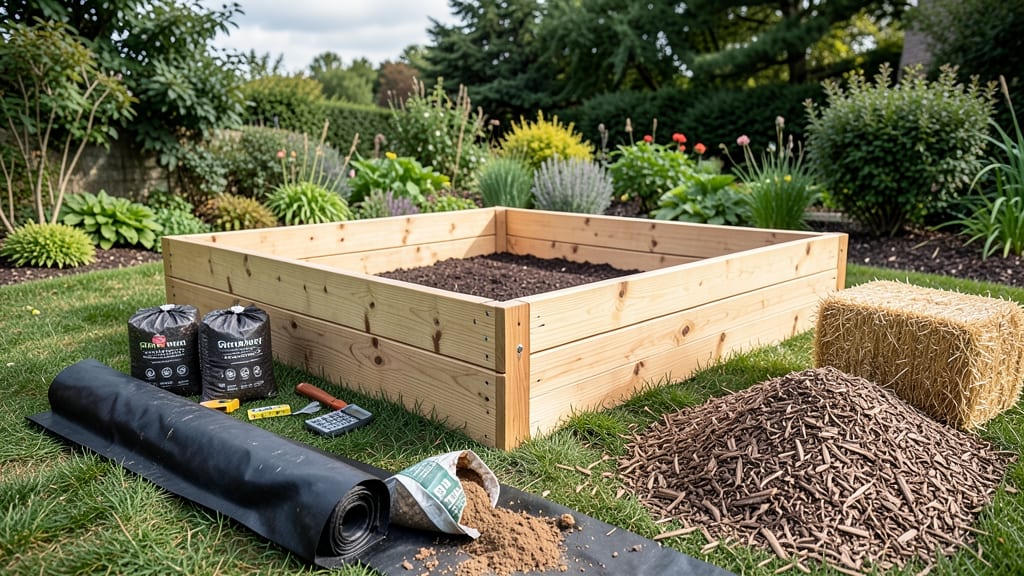
Garden bed costs vary widely based on size, materials, and whether you DIY or buy pre-made, ranging from $50 for a small raised bed to over $1,000 for a large, premium custom design with soil and plants included. Wooden beds cost $10–$30 per square foot, while metal or composite options run $20–$50 per square foot. Labor and soil add significant expenses for pre-made or professional installations.
Planning your garden bed budget starts with understanding what drives these costs. Material choice is the biggest factor—cedar, for example, resists rot but costs more upfront than pressure-treated wood, while composite or metal beds last longer but require higher initial investment. Size matters too: a 4x8-foot bed costs significantly less than a 10x12-foot one, even with the same materials.
I’ve seen DIY projects cut costs by 50% or more when using reclaimed lumber or cinder blocks, though durability becomes a trade-off. 🌱 For pre-made beds, installation fees and quality soil can easily double the base material cost, so always ask for itemized quotes.
Don’t forget to factor in long-term expenses like soil replenishment and annual maintenance. A well-built cedar bed might cost more initially but lasts 10+ years, while cheaper materials may need replacing every 3-5 years.
Regional lumber prices also swing wildly—check local suppliers for bulk discounts or off-season deals. For beginners, starting small with a 4x4-foot bed (around $100-$200) lets you test different materials before committing to larger projects.
💡 In This Article
- Key Factors Influencing Garden Bed Pricing
- Budget-Friendly Garden Bed Ideas for Beginners
Key factors influencing garden bed pricing
Material selection drives the biggest cost variations in garden beds. Cedar planks, for example, cost $3–$6 per board foot due to natural rot resistance, while pressure-treated lumber runs $1.50–$3 per board foot but may leach chemicals over time.
Metal beds (galvanized steel or aluminum) start at $20–$30 per square foot but last 20+ years, whereas composite lumber (plastic-wood blends) costs $15–$25 per square foot but resists insects and moisture without chemical treatments. The trade-off?
Metal beds can get too hot for plants in summer unless shaded, while cedar beds offer natural insulation for roots.
Bed dimensions create exponential cost jumps—surface area isn't the only factor. A 4x4-foot bed (16 sq ft) costs roughly $100–$200 in materials, but a 10x12-foot bed (120 sq ft) might cost $800–$1,500 even at the same per-square-foot rate.
This is because larger beds require more corner brackets, screws, and structural support. For pre-made beds, labor adds $500–$1,500 depending on complexity—installing a 12x16-foot cedar bed with built-in irrigation could cost $2,500+ installed.
Soil quality compounds costs too: premium organic topsoil runs $30–$50 per cubic yard, while basic garden soil is $15–$25 per cubic yard.
Regional pricing creates wild swings—lumber in Pacific Northwest states averages 20–30% higher than Midwest prices due to transportation costs and local demand. Bulk material discounts can cut costs by 15–25% if you buy 10+ sheets of lumber at once.
For example, 8-foot cedar planks might drop from $5.50/board foot to $4.25/board foot in bulk. Labor rates vary too: in urban areas, professional installation averages $15–$30 per hour, while rural contractors charge $10–$20 per hour.
Always ask if quotes include delivery fees—some suppliers charge $50–$150 for remote deliveries.
Long-term maintenance costs often get overlooked. Cedar beds need resealing every 2–3 years ($50–$100 per application), while metal beds may require repainting every 5 years ($100–$200). Composite beds have the lowest maintenance but cost 2–3x more upfront.
Soil depletion is another factor: high-yield gardens may need 2–3 inches of fresh compost annually, adding $50–$150 per year for a 10x10-foot bed.
The material that saves you money today might cost more tomorrow in repairs or replacements—cedar lasts 10–15 years, while pressure-treated wood may only last 5–8 years in wet climates.
Consider these hidden cost multipliers when budgeting:
- Permits: Some municipalities require $50–$200 permits for permanent installations
- Drainage systems: Adding gravel or French drains can add $100–$300
- Built-in features: Trellises or irrigation systems increase costs by 20–40%
- Delivery fees: Remote areas may add $100–$300 for heavy materials
For the most cost-effective choice, match your material to your climate and usage. In humid regions, cedar or composite beds outlast pressure-treated wood by 30–50%. In dry climates, untreated wood may last surprisingly long with proper sealing.
Always calculate your 5-year total cost of ownership—sometimes spending $200 more upfront on a durable material saves $500+ over time in replacements and repairs. 💰