
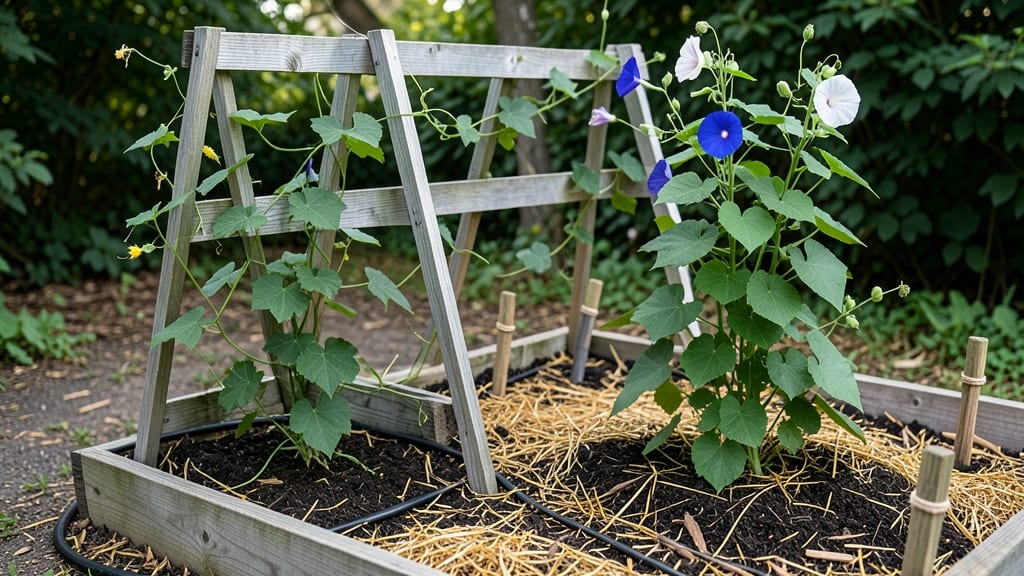
Garden Bed Trellis Ideas: Twelve Climbing Plants That Double Your Harvest Space

Tools

Garden Bed Trellis Ideas: Twelve Climbing Plants That Double Your Harvest Space

Transforming your garden bed with trellis ideas isn’t just about saving space—it’s about unlocking a vertical world of lush growth and effortless beauty.

Picture this: your 6-foot-tall clematis 🌿 spiraling up a rustic wooden arch, its blooms cascading like nature’s chandelier while your zucchini vines climb a sturdy metal grid. That’s the magic of a well-placed trellis—turning flat garden beds into thriving, space-efficient displays that also keep pests at bay and improve airflow.

But here’s the catch: not all trellises are created equal. The wrong design can leave your plants struggling or your garden looking cluttered.

Whether you’re working with a small urban plot or a sprawling backyard, the right trellis—paired with the right plants—can double your harvest, extend your blooming season, and even add year-round interest with evergreens or winter berries.

In this guide, I’ll walk you through 12 climbing plants that thrive on trellises, from fast-growing cucumbers to romantic clematis, plus creative trellis styles that blend function with garden artistry. Ready to grow up instead of out?

Best space-saving climbing plants for garden bed trellises

Vertical gardening with trellises is one of my favorite ways to maximize garden bed space while creating stunning focal points. The right climbing plants can transform a small plot into a high-yielding, pest-resistant oasis.

I’ve tested these 12 top performers—from edible favorites to fragrant flowers—that thrive on trellises, cages, or obelisks while offering companion planting benefits.

Whether you’re growing vegetables for harvest or ornamental flowers for beauty, these plants deliver fast growth, disease resistance, and space-saving efficiency. Pair them with the right trellis type—like cages for compact varieties or obelisks for tall climbers—and watch your garden bed become a vertical powerhouse.

🌱

Plant Type Sun Needs Trellis Type Mature Height Growth Rate
Pole Beans Vegetable Full Sun Trellis or Netting 6-10 ft Fast (60 days)
Cucumbers Vegetable Full Sun Obelisk or Cage 10-15 ft Moderate (50 days)
Squash (Bush or Vining) Vegetable Full Sun Trellis or String 8-12 ft Moderate (45 days)
Morning Glory Flower Full Sun Arched Trellis 10-15 ft Fast (60 days)
Sweet Peas Flower Full Sun to Partial Shade Cage or Obelisk 6-8 ft Moderate (90 days)
Nasturtiums Herb/Flower Full Sun to Partial Shade Trellis or String 3-5 ft Fast (45 days)
Clematis

How to choose and install trellises for maximum growth

Selecting the right trellis can transform your garden bed from a flat, crowded space into a thriving vertical oasis. The key is matching the trellis material and design to your plant type and garden layout.

For delicate vines like clematis, opt for lightweight bamboo or plastic netting, while hearty vegetables like pole beans need sturdy wooden or metal frames to handle their weight. I’ve found that metal trellises resist rust and last decades, while wooden options blend seamlessly into rustic gardens.

Before purchasing, measure your garden bed’s width and depth to determine trellis size. A 6-foot trellis works well for most vegetable beds, but taller varieties like morning glories may need 8-foot or taller supports.

Pro tip: Install trellises along the north side of garden beds to avoid casting shadows on sun-loving plants. For small spaces, wall-mounted trellises save ground space while adding vertical interest.

⚠️ Common Mistakes That Stunt Plant Growth

Avoid these pitfalls to keep your climbing plants thriving:

  • Overcrowding: Plants compete for nutrients and sunlight, leading to weak stems. Space trellises 18-24 inches apart for optimal airflow.
  • Weak anchors: Flimsy stakes or unsecured trellises topple in wind or storms. Bury supports 12 inches deep or use concrete anchors for heavy plants.
  • Improper height: Too short = plants sprawl; too tall = wasted space. Match trellis height to mature plant size (e.g., 5-foot trellis for cucumbers, 10-foot for clematis).

🌱 Remember: Adjust trellis height as plants grow—don’t wait until they’re struggling to support themselves!

When installing, prioritize stability and flexibility. For wooden trellises, use galvanized screws to prevent rust and pre-drill holes to avoid splitting the wood. Metal trellises should be grounded with stakes or attached to a fence post for extra security.

Bamboo trellises are quick to assemble but may need twine or zip ties to reinforce joints. I recommend adding horizontal crossbars every 2 feet to prevent vines from sagging under fruit weight (think tomatoes or melons).

Don’t forget about plant training—how you guide vines onto the trellis matters just as much as the support itself. For self-clinging plants like ivy, minimal guidance is needed, but twining vines (e.g., squash) require gentle tying with soft jute twine or velcro strips every 3-5 days.

Avoid plastic ties—they can girdle stems as plants grow. My go-to method? Weave young shoots through the trellis lattice and let them self-train over time.

For durability, treat wooden trellises with linseed oil annually to repel moisture, and paint metal trellises with heat-resistant spray to prevent warping. If you’re on a budget, DIY trellises from chicken wire or reclaimed lattice work beautifully for annuals.

Just ensure the material is plant-safe—avoid treated wood with high chemical levels. I’ve even repurposed old window frames into charming vertical gardens for herbs like basil.

Finally, consider seasonal adjustments. In windy climates, secure trellises with cable ties to a permanent structure, and in heavy rain, ensure proper drainage around the base to prevent root rot.

With the right trellis, your climbing plants will thrive vertically, freeing up precious garden bed space for other crops. Happy growing!

★★★★★4.9(10 reviews)
Categories Tools