
Planting
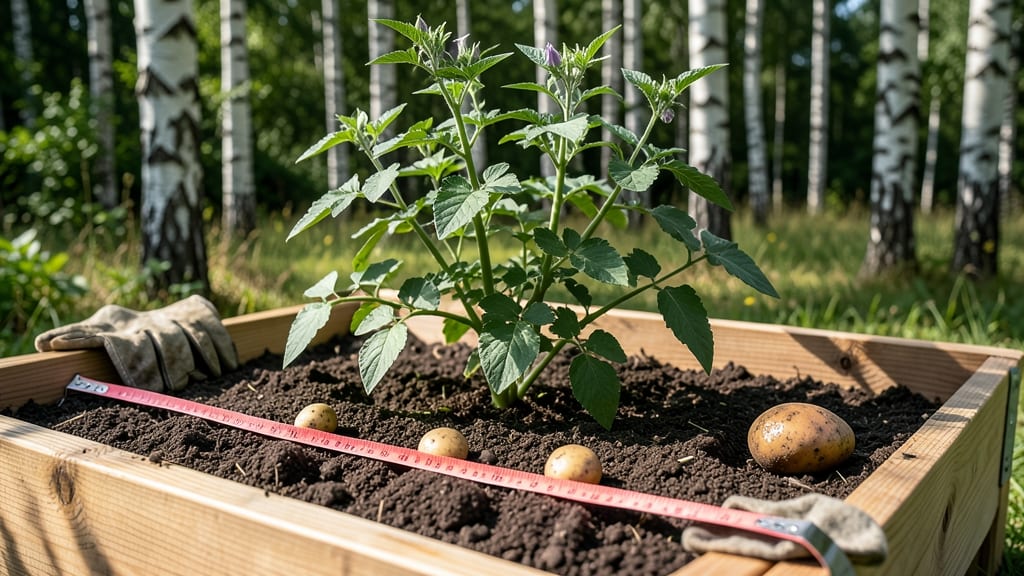
A raised bed how deep a raised bed for potatoes should be depends on one critical factor: 12 inches of depth—any less, and your tubers will struggle to grow plump and healthy.
Picture this: you’ve spent weeks tending your 🥔 plants, only to dig up tiny, misshapen potatoes because the bed wasn’t deep enough. That’s a heartbreaking waste of time and space. The right depth isn’t just about size—it’s about drainage, soil health, and giving those tubers room to expand.
In this guide, I’ll break down the science behind ideal raised bed depth, how to adjust for different potato varieties, and why a 12–18-inch bed is the sweet spot for most gardeners in USDA Zone 6a.
Whether you’re a beginner or a seasoned grower, these tips will help you maximize your harvest without overbuilding.
You’ll also learn how to layer soil for better drainage, avoid common mistakes that ruin growth, and even save money by building the perfect bed the first time. Ready to dig in?
Optimal raised bed depth for potatoes: science-backed measurements for maximum yield
Potatoes need space to grow—both above and below ground. While their vines might only reach 12–18 inches tall, their tubers spread horizontally and vertically, demanding deep, loose soil for maximum yield.
A raised bed that’s too shallow (10 inches) will stunt tuber development, while one that’s too deep (30+ inches) wastes resources and can lead to poor drainage or uneven soil temperatures.
The ideal raised bed depth for potatoes is 12–18 inches, but this varies based on variety and soil type. For example, large tubers like Russets thrive in 18–24-inch beds, while fingerlings or early-season varieties do well in 12–14-inch depths.
Deeper beds also help regulate soil temperature and improve moisture retention, which is critical during dry spells or hot summers.
| Depth Requirement | Best For | Soil Needs | Yield Impact |
|---|---|---|---|
| 12–14 inches | Early varieties (e.g., 'Red Pontiac') | Loamy, well-draining | Smaller tubers; faster harvest |
| 16–18 inches | Medium varieties (e.g., 'Yukon Gold') | Balanced organic matter | Optimal tuber size and quantity |
| 18–24 inches | Large varieties (e.g., 'Russet') | Deep, loose, high-organic | Larger tubers; higher yield |
| 24+ inches | Long-season or heirloom varieties | Custom-layered soil | Maximum tuber development; risk of overgrowth |
The root zone for potatoes extends beyond the tuber itself. Tubers form along the stem nodes, so deeper beds allow more nodes to develop into harvestable potatoes.
For example, a 24-inch bed can accommodate 3–4 layers of tubers stacked vertically, while a 12-inch bed might only support 1–2 layers. This vertical growth is why deeper beds often produce 2–3 times more yield per square foot.
Drainage is another critical factor tied to depth. Potatoes hate soggy soil, which can lead to rot or disease. A raised bed’s height naturally improves drainage by elevating tubers above the water table.
Aim for 12+ inches of loose, well-draining soil to prevent waterlogging. If your soil is clay-heavy, add sand or perlite to the mix, and consider a slightly deeper bed (18–20 inches) for better airflow.
Soil temperature also plays a role in tuber development. Deeper beds retain heat longer in spring, giving potatoes a head start. In contrast, shallow beds cool quickly, slowing growth. For early-season planting, a 16–18-inch bed with black plastic mulch can warm the soil faster than a 12-inch bed.
Meanwhile, in hot climates, deeper beds help insulate tubers from extreme temperatures, reducing stress.
Moisture retention is the final piece of the puzzle. Deeper beds hold more organic matter, which improves water-holding capacity. This is especially useful in dry climates or during summer droughts.
For example, a 20-inch bed filled with compost and peat moss can retain 30% more moisture than a 12-inch bed with standard soil. Just be cautious—overwatering deep beds can lead to root rot, so always check soil moisture before watering.
If you’re growing multiple potato varieties in one season, consider layered planting. Plant early varieties in the top 6 inches of a 18-inch bed, then add compost and mulch before planting late-season varieties in the lower layers.
This maximizes space and extends your harvest window. Just ensure each layer has at least 6 inches of soil between plantings to avoid competition.
For container growing, the same depth rules apply—12–18 inches minimum. Use fabric grow bags or wooden boxes with drainage holes to mimic raised bed conditions. Smaller containers (10 inches deep) work for bush varieties like 'Red LaSoda,' but larger tubers will be stunted.
Always rotate containers seasonally to prevent soil depletion or disease buildup.
Pro tip: If your raised bed is less than 12 inches deep, you can still grow potatoes by <
How to adjust raised bed depth for different potato varieties and soil types
Not all potatoes need the same depth to thrive. Early-season varieties like Red Pontiac or Yukon Gold can thrive in 12–14 inch beds, while late-season giants like Russet Burbank or Sweet Potato varieties demand 18–24 inches of soil to develop their signature large tubers.
The key is matching your potato variety to your bed’s depth, while accounting for your local soil type—sandy soils drain fast and may need deeper beds to retain moisture, while clay holds water and can work with shallower depths.
Container growers often face a different challenge: maximizing space in 5–10 gallon pots. Here, fingerling varieties like French Finger or Adirondack Blue shine, as their smaller tubers fit perfectly in 12–16 inch deep containers.
Traditional raised beds, however, offer more flexibility—letting you layer compost-rich soil and adjust depth based on your harvest goals.
Soil type plays a surprising role in depth adjustments. In sandy soils, potatoes grow faster but may need 2–4 extra inches of depth to prevent tubers from drying out. In clay-heavy soils, a shallower bed (like 14–16 inches) can work because the natural compaction slows tuber growth, reducing the need for extra space. Always test your soil’s drainage—if water pools after 24 hours, amend with perlite or compost to improve aeration.
| Potato Type | Ideal Bed Depth | Soil Adjustments | Best For |
|---|---|---|---|
| Early Varieties (e.g., Red Pontiac) | 12–14 inches | Loose, well-draining | Small containers, fast harvests |
| Mid-Season (e.g., Yukon Gold) | 14–18 inches | Compost-amended | Traditional raised beds |
| Late Varieties (e.g., Russet Burbank) | 18–24 inches | Deep, moisture-retentive | Large tubers, storage types |
| Fingerlings (e.g., French Finger) | 12–16 inches | Fast-draining mix | Containers, small spaces |
| Sandy Soils | 16–20 inches | Add organic matter | Moisture retention |
| Clay Soils | 12–16 inches | Aerate with perlite | Prevent compaction |
For compacted soils, consider a two-tier approach: start with a 6-inch layer of coarse material (like gravel or bark chips) at the bottom to improve drainage, then layer 12–18 inches of compost-rich topsoil. This mimics natural soil stratification and gives roots room to expand without hitting hardpan.
If your bed feels waterlogged after rain, add a 4-inch layer of straw mulch to the surface—it’ll slow evaporation while keeping roots aerated.
Pro tip: If you’re unsure about depth, plant test tubers at varying levels. Dig a small trench alongside your bed and bury a few seed potatoes at 10-inch, 14-inch, and 18-inch depths. By harvest time, you’ll see which depth yields the most plump, disease-free tubers.
This hands-on method beats guessing—and it’s a great way to troubleshoot poor drainage or root binding before committing to a full bed.
Remember, depth isn’t the only factor—soil fertility and watering consistency matter just as much. But when you nail the depth, you’ll unlock bigger harvests with less effort. Happy digging! 🥔