
Light Requirements
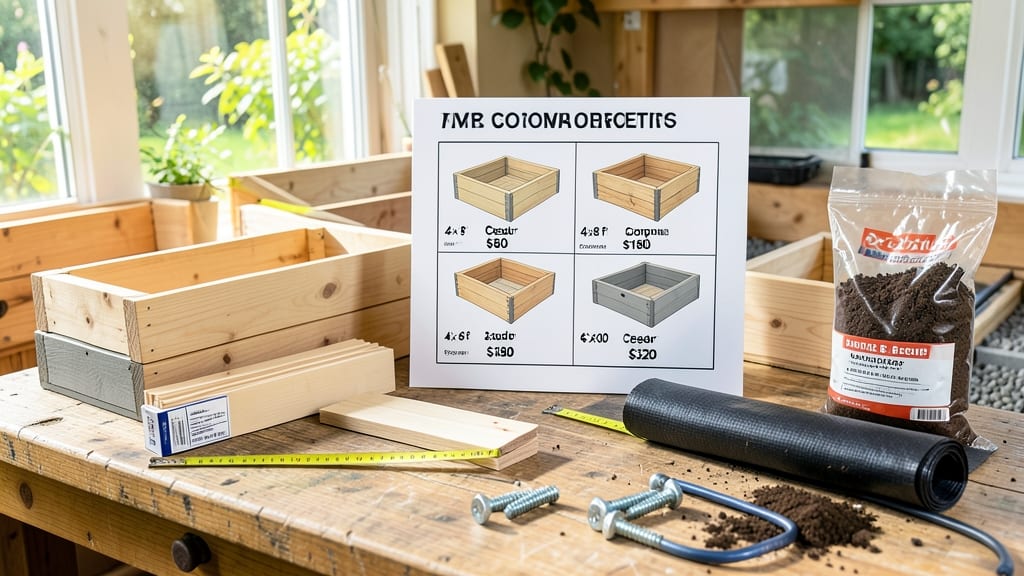
The cost of a raised garden bed ranges from $100 to $1,500+, influenced by materials like cedar ($500–$1,200) or composite lumber ($800–$2,000) and dimensions (4x8 ft: $300–$1,000; 8x12 ft: $800–$2,500). DIY kits can cut expenses by 30–50%, while pre-built options with soil and liner add $200–$500.
Your budget for a raised garden bed depends heavily on the materials you choose and whether you opt for a DIY approach or a pre-assembled kit. 💰 Cedar and redwood are popular for their natural resistance to rot, but they come at a premium compared to pressure-treated pine or recycled wood.
For example, a simple 4x4 ft cedar bed might run you around $400, while an 8x12 ft composite bed could exceed $1,500. The size isn't just about footprint—taller beds require more lumber and hardware, driving costs up significantly.
Beyond the bed itself, don't forget to account for soil, drainage solutions, and any liners or hardware needed to assemble it. A basic soil mix can add $50–$150 per cubic foot, while high-quality compost or specialty blends may push that closer to $200.
I've found that investing in durable materials upfront often saves money in the long run, as they require less frequent replacements.
💡 In This Article
- Raised Garden Bed Cost Factors by Material
- Hidden Costs and Ways to Save on Raised Beds
Raised garden bed cost factors by material
The material you choose for your raised garden bed isn't just about aesthetics—it directly impacts both upfront costs and long-term durability. Cedar and redwood, for instance, resist rot and insects naturally, but their price reflects this longevity.
A 4x8 ft cedar bed typically costs $500–$800, while redwood can run $600–$1,000 for the same size due to its even greater resistance to moisture. These woods last 10–15 years with minimal treatment, making them a smart investment for gardeners prioritizing sustainability and low maintenance.
On the other hand, pressure-treated pine offers a budget-friendly alternative at $200–$400 for a 4x8 ft bed, but its chemical treatment requires more frequent inspections for splintering or warping. Composite lumber, made from recycled wood fibers and plastic, bridges the gap between cost and durability.
A 4x8 ft composite bed costs $800–$1,200 but lasts 20+ years without rotting. The trade-off? Higher upfront costs and potential fading from UV exposure over time. For cost-per-square-foot comparisons, cedar averages $15–$25/sq ft, while composite lumber jumps to $30–$50/sq ft.
Hardware costs can add $50–$200 to your total, depending on whether you use galvanized screws, corner brackets, or hidden fasteners. Galvanized screws ($10–$20 for a full kit) prevent rust but may loosen over time, while stainless steel hardware ($30–$50) offers corrosion resistance.
The choice here affects both assembly ease and long-term stability. For example, a 6 ft tall bed requires 30–40 screws and 4–6 corner brackets, increasing labor time and material costs by 20–30% compared to a 2 ft tall version.
Durability isn't just about the wood—it's also about how the bed interacts with the environment. Cedar and redwood naturally resist moisture, but pine and composite materials may need additional sealing or staining every 2–3 years to maintain their integrity.
This ongoing maintenance can add $50–$150 per year to your total costs over time. For instance, sealing a 8x12 ft pine bed requires 2–3 gallons of stain, costing $60–$120 per application. The choice of material thus becomes a balancing act between upfront savings and long-term care.
Pre-built raised beds often include these materials and hardware in their pricing, but they can add $200–$500 for convenience. For example, a pre-assembled cedar bed with soil and liner might cost $1,000–$1,500 for an 8x4 ft model, while a DIY version with the same materials would run $600–$900.
The savings come from eliminating labor costs and the precision of factory-cut lumber, which reduces waste. However, pre-built beds often include features like built-in drainage systems or integrated irrigation, adding value beyond just the wood and hardware.
Consider this real-world example: A gardener building a 4x8 ft cedar bed for vegetables might spend $550 on lumber, $30 on screws, and $100 on soil amendments, totaling $680.
If they opt for a pre-built composite bed of the same size, the cost jumps to $1,200 but includes a landscaping fabric liner and pre-drilled holes for drainage. The trade-off? Less flexibility in customization but more convenience and durability. 🌱