
Tools
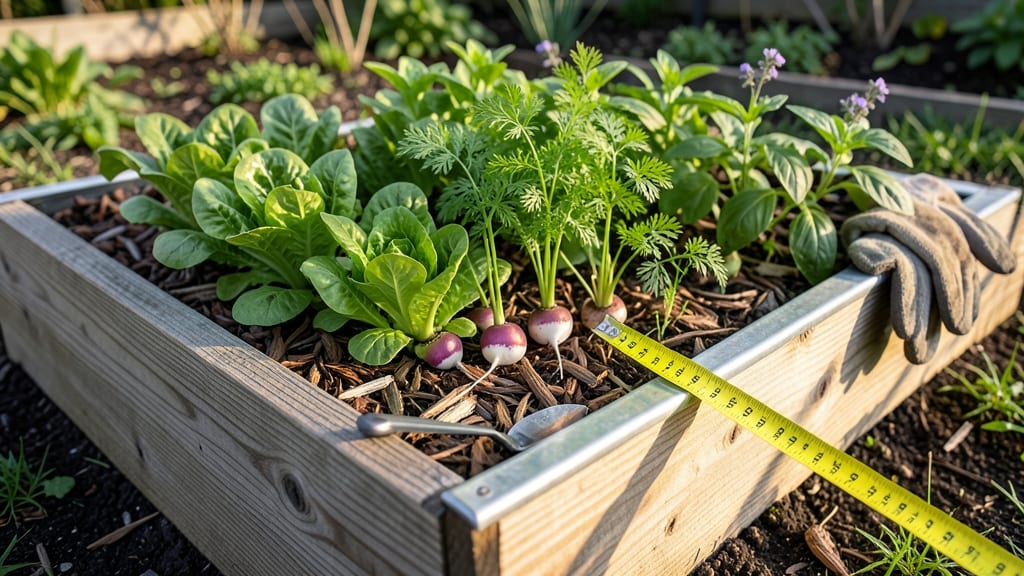
The ideal garden bed height for maximizing drainage and root development ranges between 6 to 12 inches, creating the perfect balance between soil aeration and moisture retention for healthy plant growth.
This height range isn't arbitrary—it directly impacts how plants access nutrients and oxygen.
A 6-inch bed works well for shallow-rooted plants like lettuce or herbs, while 12-inch beds give perennials like asparagus or peonies the depth they need to thrive. 🌱 The extra height also helps prevent soil compaction, which is especially important in heavy clay soils where water tends to pool.
I've found that adding 2-3 inches of compost to the bottom further improves drainage while retaining moisture for longer.
For vegetable gardens, I recommend starting with 8-inch beds—they're deep enough for most annuals while being manageable for weeding and planting.
In wet climates, you might even go slightly deeper (up to 14 inches) to prevent soggy roots, but never exceed 18 inches unless you're dealing with large shrubs or trees. The key is observing how your specific plants respond to the height over time.
💡 In This Article
- How Raised Garden Bed Height Affects Soil Health and Plant Roots
- Choosing the Right Garden Bed Height for Your Plants and Soil Type
How raised garden bed height affects soil health and plant roots
Soil aeration improves dramatically with bed height because deeper profiles allow roots to spread freely without hitting compacted layers. At 6 inches, you're creating a zone where shallow-rooted plants like radishes or basil can thrive without competition for nutrients.
The extra depth also prevents soil from drying out too quickly in hot climates, as the lower layers retain moisture longer through capillary action. Think of it like a sponge—deeper beds hold more water while still allowing excess to drain away.
Root development follows a clear pattern based on bed height. Perennials with deep taproots (like carrots or dandelions) need at least 12 inches of loose soil to establish properly. In contrast, annuals like spinach or lettuce can flourish in 6-inch beds because their roots rarely exceed 12 inches in depth.
The science here involves soil porosity: deeper beds maintain better air pockets between particles, which is crucial for microbial activity that breaks down organic matter into plant-available nutrients. Without proper aeration, roots suffocate and become stunted.
Moisture retention becomes a balancing act at different heights. A 6-inch bed dries out faster in dry climates because there's less soil mass to hold water, while 12-inch beds can maintain moisture for weeks in wetter conditions.
This is why I recommend amending the bottom 4 inches of any bed with coarse sand or perlite—it creates drainage channels while still allowing water to rise to upper layers through capillary action.
The ideal scenario is a bed where water drains within 24 hours of heavy rain but doesn't dry out completely between waterings.
Soil temperature also varies with bed height, creating microclimates that affect plant growth. Shallower beds (6 inches) warm up faster in spring, which is great for cool-season crops like peas, while deeper beds (12 inches) maintain more stable temperatures year-round.
This temperature regulation is particularly important for heat-sensitive plants like leafy greens. In my own garden, I've noticed that 8-inch beds strike the perfect balance—warming quickly enough for early planting but deep enough to support most vegetables through their growing season.
One often-overlooked factor is how bed height affects weed competition. Taller beds (over 12 inches) create a physical barrier that blocks many annual weeds from germinating, while shallower beds (6 inches) require more frequent weeding.
The 6-12 inch range gives you that sweet spot where weeds are manageable without needing excessive maintenance. This height also makes it easier to maintain consistent soil quality throughout the bed rather than having to deal with varying depths that can lead to inconsistent moisture and nutrient levels.
For container gardening or urban spaces where full-size beds aren't practical, I recommend 8-inch deep fabric grow bags as a compromise. They offer enough depth for most vegetables while being portable and lightweight.
The key is understanding that while you can't always control bed height, you can always adjust soil composition to optimize growth within the constraints of your space. 🌱