
Flowers
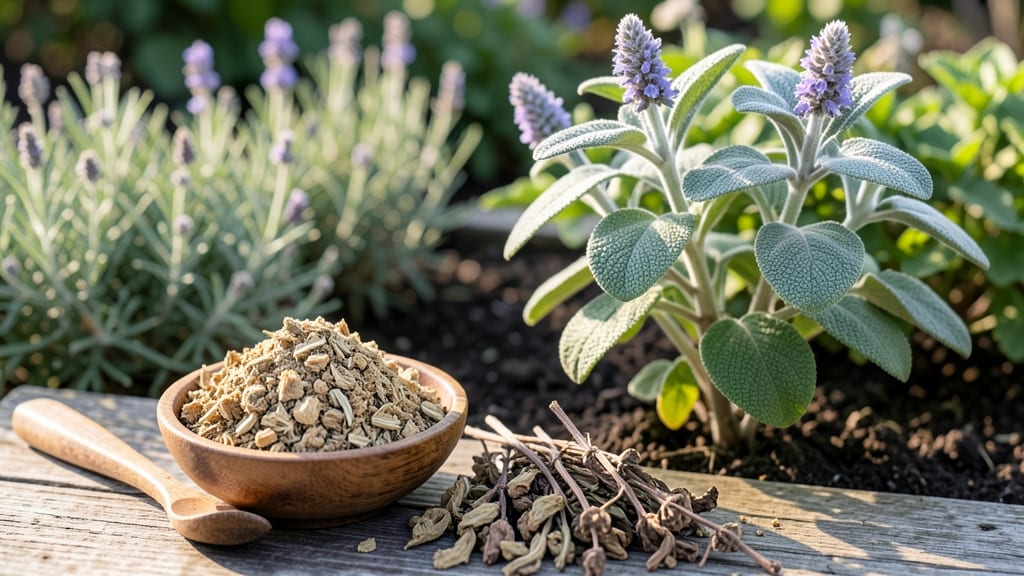
Rubbed sage and ground sage are not the same: rubbed sage retains its leaf structure for a more aromatic, layered flavor, while ground sage is finely powdered for quicker infusion but loses some texture and depth. Rubbed sage works best in dry rubs and whole-leaf dishes, while ground sage blends smoothly into sauces and baked goods.
Rubbed sage gets its name because the leaves are gently crushed to release oils while keeping their shape intact.
This process preserves the plant's natural oils and volatile compounds, creating a more complex flavor profile that builds as it cooks. 🌿 Ground sage, on the other hand, is finely powdered, which speeds up flavor infusion but can make dishes taste more bitter if overused.
The texture difference also matters—rubbed sage adds visual appeal and a satisfying bite, while ground sage dissolves completely into mixtures.
For best results, use rubbed sage when you want bold, layered aromas—like in herb crusts or whole-leaf garnishes—while ground sage works better in sauces or baking recipes where you need even distribution. I always keep both on hand because they serve completely different purposes in the kitchen.
💡 In This Article
- How Rubbing Sage Preserves Flavor and Texture
- Best Uses for Rubbed Sage vs Ground Sage in Cooking
How rubbing sage preserves flavor and texture
The key difference starts with the physical process: rubbing sage leaves creates microscopic fractures in the leaf surface without fully breaking them down. This gentle crushing releases essential oils—like thujone and camphor—gradually during cooking, creating a layered aroma that builds over time.
Ground sage, however, is pulverized into particles smaller than 0.5mm, exposing more surface area that releases oils instantly but can also accelerate oxidation, making the flavor more volatile.
Leaf structure plays a crucial role in heat distribution. Whole or rubbed sage leaves act as tiny heat sinks, absorbing and redistributing heat more evenly than powder.
When you sear a pork chop with rubbed sage, the leaves create a protective barrier that prevents the meat from drying out while infusing flavor slowly. Ground sage, meanwhile, disperses quickly—ideal for sauces where you want immediate flavor integration, but less effective for creating that deep, caramelized crust.
The sensory impact is dramatic: rubbed sage delivers a fresh, piney aroma that lingers, while ground sage offers a more immediate but sometimes bitter punch if overused.
Think of it like comparing fresh herbs to dried—rubbed sage behaves more like fresh, with texture and aroma that evolve during cooking. 🌿 For example, when I make sage butter, I prefer rubbed sage because the leaves maintain their shape, creating visual appeal and preventing the butter from becoming too bitter.
Grinding sage also affects essential oil volatility. The tiny particles in ground sage release more terpenes quickly, which can evaporate at higher temperatures (above 175°F). Rubbed sage, with its intact structure, retains these compounds longer, delivering flavor that persists even after cooking.
This is why rubbed sage works better in slow-cooked dishes where you want sustained aroma, while ground sage excels in quick preparations like pesto or stuffing.
Another critical factor is moisture retention. Rubbed sage leaves trap moisture against the food surface, creating a steaming effect that keeps proteins tender.
Ground sage, being more porous, can draw moisture away, which is why it’s better suited for dry mixtures like bread dough where you want even distribution without clumping. The texture contrast is also noticeable—rubbed sage adds a slight crunch, while ground sage dissolves completely.
For a practical demonstration, try this: sprinkle both types on toasted bread and taste. The rubbed sage will offer a more complex, layered flavor with visible leaf fragments, while the ground sage will taste stronger but flatter.
This difference becomes even more pronounced when cooking—rubbed sage builds character, while ground sage delivers instant but fleeting impact. 💫