
Landscaping
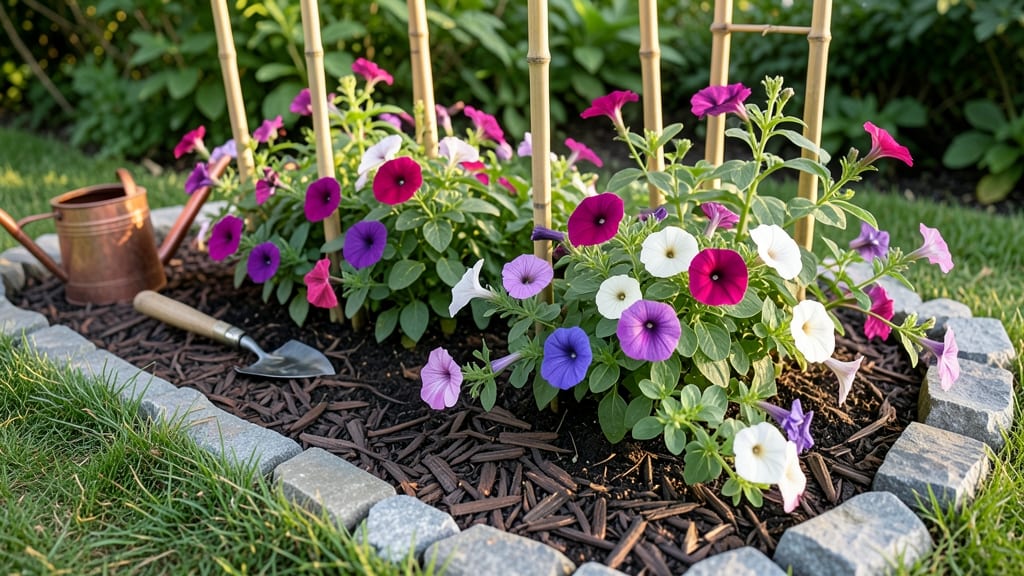
Transforming your yard with petunia flower bed ideas starts with bold color blocks that make neighbors stop and stare. 🌸 I remember planting my first petunia bed—what began as a patch of green turned into a riot of purple, pink, and white within weeks, completely changing the look of my front yard.
The secret isn’t just choosing vibrant colors; it’s layering petunias with complementary plants like salvia or marigolds for texture and height. Spacing matters too—crowding them leads to leggy, sparse blooms, while giving them room ensures full, lush growth.
For a show-stopping display, mix trailing petunias at the edges with upright varieties in the center. By summer’s peak, your bed will be a nonstop bloom factory, with flowers lasting from June through frost.
The key is deadheading spent blooms and keeping the soil consistently moist but not soggy—simple steps that pay off in months of color. Works for borders, hanging baskets, or mixed beds—just adjust spacing and plant ratios. Let’s make your yard the talk of the neighborhood!
📚 In This Guide
- What you need
- Instructions
- Tips and common mistakes
- Wrapping up and next steps
What you need
- ● Creating a stunning petunia flower bed is easier than you think! Here’s everything you’ll need to bring your bold, colorful vision to life—whether you’re a seasoned gardener or just starting out. 🌸✨
- ● Pro tip: 💡 Test your soil’s pH (ideal range: 6.0–7.0 for petunias) with a kit from your local garden center. Adjust with lime (to raise pH) or sulfur (to lower pH) if needed!
Step-by-Step instructions for creating a petunia flower bed
Here's how to design a vibrant petunia display that transforms any space into a showstopper.
🌱 Step 1: Plan Your Color Block Layout
Start by sketching your flower bed design on paper. Petunias thrive in bold color groupings, so I recommend creating 3-4 distinct blocks using 3-5 complementary colors. For example, pair deep purple with bright pink, or hot orange with cool blue. Measure your space and divide it into sections—each block should be at least 2 feet wide for maximum impact.
Think about height variation too. Place taller varieties (like Grandiflora petunias) in the back or center, while trailing types (like Surfinia) can spill over edges. This creates visual depth and prevents leggy growth from shading smaller plants. I always sketch my design at actual size to avoid surprises when planting.
🪴 Step 2: Prepare the Soil for Petunia Success
Petunias demand well-draining, nutrient-rich soil—never garden soil alone. Mix 2 parts premium potting mix with 1 part perlite or vermiculite to improve aeration. For each 4-inch planting hole, add 1 tablespoon of balanced 10-10-10 fertilizer directly into the soil. This ensures strong root establishment from day one.
Test your soil's moisture level before planting. Stick your finger 2 inches deep—if it feels dry, water thoroughly until moisture reaches that depth. Petunias hate soggy roots but won't tolerate drought either. I like to work when the soil is damp but not wet, as this prevents compaction during planting.
☀️ Step 3: Plant with Strategic Spacing
Dig holes twice as wide as the petunia's root ball but only as deep as the container's drainage holes. Gently remove plants from their pots and tease apart any circling roots. Space compact varieties (like Wave petunias) 8-10 inches apart, while large-flowered types (like Mitchell) need 12-14 inches to prevent crowding.
Here's the trick: plant slightly deeper than the container level—this encourages stronger stems. Press soil firmly around each plant to eliminate air pockets, then give everything a deep watering to settle roots. Watch for wilting within the first 24 hours—this is normal as they adjust to their new home.
💧 Step 4: Establish a Watering Routine
Water deeply every morning for the first 2 weeks to help roots establish. Use a soaker hose or drip irrigation to deliver moisture at the base—avoid overhead watering, which spreads disease. Petunias need 1-1.5 inches of water weekly, but check soil moisture daily. Stick your finger 1 inch deep—if it's dry, water again.
After establishment, reduce frequency but increase depth. Let the top 1-2 inches dry out between waterings—this prevents root rot while keeping blooms vibrant. Mulch with 2 inches of shredded bark to retain moisture and suppress weeds. I always water in the early morning so foliage dries quickly, reducing fungal risks.
✂️ Step 5: Maintain with Regular Care
Deadhead spent blooms weekly to encourage continuous flowering. Pinch back leggy stems to promote bushier growth—this keeps plants compact and prevents them from flopping. Feed every 4-6 weeks with a balanced liquid fertilizer (like 20-20-20) diluted to half strength. Petunias are heavy feeders and respond beautifully to regular nutrients.
Watch for powdery mildew on leaves—this usually means airflow is poor. Space plants slightly wider if needed and avoid overhead watering. For extra protection, spray leaves with a baking soda solution (1 tsp per gallon of water) once a month. With proper care, your petunia bed will stay lush and colorful all season long.
Tips & tricks for stunning petunia flower beds
Creating showstopping petunia displays is easier when you know these pro gardening secrets.
Color Block Precision: When sketching your design in Step 1, use colored pencils to map out each block—this visual helps you see how colors will interact in sunlight. I like to test my color combinations on a whiteboard first. For maximum impact, place your darkest colors (like deep purple) in the center of each block where they'll stand out against lighter edges. This creates a natural focal point that draws the eye immediately.
Soil Mixing Hack: In Step 2, don't just eyeball your soil mix. Use a 5-gallon bucket to measure your 2 parts potting mix to 1 part perlite—this ensures consistent aeration. I add a handful of worm castings to each bucket too (optional but game-changing). The key is to mix thoroughly until it looks uniformly fluffy. Press a handful—it should hold shape but crumble easily when squeezed.
Planting Depth Secret: That "slightly deeper" instruction in Step 3 is crucial. I measure the root ball height, then plant at 1.5 times that depth. For example, if your petunia's root ball is 3 inches tall, plant it 4.5 inches deep. This buried stem creates stronger anchor roots that support those heavy blooms. Just make sure the top of the root ball stays above soil level—never bury the crown.
Watering Timing: The first 2 weeks are critical for root establishment in Step 4. Set a reminder for 9 AM daily—morning watering prevents fungal issues from overnight moisture. Use a rain gauge to measure your 1-1.5 inches weekly. If you're using a timer on your soaker hose, set it for 15-20 minutes initially, then adjust based on your soil's absorption rate. I always check soil moisture at the same time each day to establish a routine.
Pro Tips for Petunia Flower Bed Ideas
- Creating showstopping petunia displays is easier when you know these pro gardening secrets.
- Color Block Precision: When sketching your design in Step 1, use colored pencils to map out each block—this visual helps you see how colors will interact in sunlight.
- Soil Mixing Hack: In Step 2, don't just eyeball your soil mix.
Frequently asked questions
Got questions about creating a stunning petunia flower bed?
You’re not alone! Here are answers to the most common concerns—from timing to troubleshooting—so your garden blooms with confidence.
When is the best time to plant petunias for a flower bed?
Plant petunias in early spring (after the last frost) or late summer for fall blooms. For instant color, opt for transplants instead of seeds—they’ll flower faster! Harden off seedlings for 7–10 days before planting to avoid shock. Pro tip: Use mulch to retain moisture and protect roots.
How often should I water petunia flower beds?
Petunias need consistent moisture—water deeply 2–3 times per week (daily in extreme heat). Aim for 1 inch of water per week, including rainfall. Avoid overhead watering to prevent fungal diseases like powdery mildew. Troubleshoot: Wilting leaves? Check soil moisture—petunias hate soggy roots!
Can I mix petunias with other flowers in a flower bed?
Pair petunias with complementary plants like salvia, marigolds, or pansies for texture and pollinator appeal. Avoid overcrowding—petunias thrive with 12–18 inches of space. For contrast, try dwarf varieties near borders or trailing types in hanging baskets. Design hack: Use moss or ornamental grasses as fillers for a low-maintenance look.
What pests or diseases should I watch for in petunia flower beds?
Common issues include aphids, spider mites, and whiteflies. Treat with neem oil or insecticidal soap for mild infestations. Powdery mildew (white powder on leaves) thrives in humidity—improve airflow and avoid wetting foliage. Preventative tip: Rotate plants yearly to stop soil-borne diseases.
How can I keep my petunia flower bed looking full all season?
Deadhead spent blooms weekly to encourage new flowers. Fertilize every 2–4 weeks with a balanced, water-soluble fertilizer (10-10-10). For long-lasting color, choose multiflora varieties or mix annuals with perennials like black-eyed Susans. Bonus: Add a slow-release fertilizer at planting for a head start!
| Quick Fixes | Problem |
|---|---|
| Increase watering frequency | Wilting petunias |
| Trim leggy stems | Overgrown, sparse blooms |
| Replace diseased plants | Yellow leaves or spots |
Wrapping up and next steps
Transforming your outdoor space with petunia flower beds is a fantastic way to add vibrant color and life to your yard! Whether you’re creating bold color blocks, mixing heights, or adding texture with foliage, these ideas will give you instant curb appeal.
The key is to experiment, have fun, and let your creativity bloom—literally! 🌸
Now that you’re inspired, grab your gardening tools and start planning your dream petunia display. Need a little extra guidance? Check out our step-by-step planting guide or browse seasonal care tips to keep your flower bed thriving all season long!