
Tools
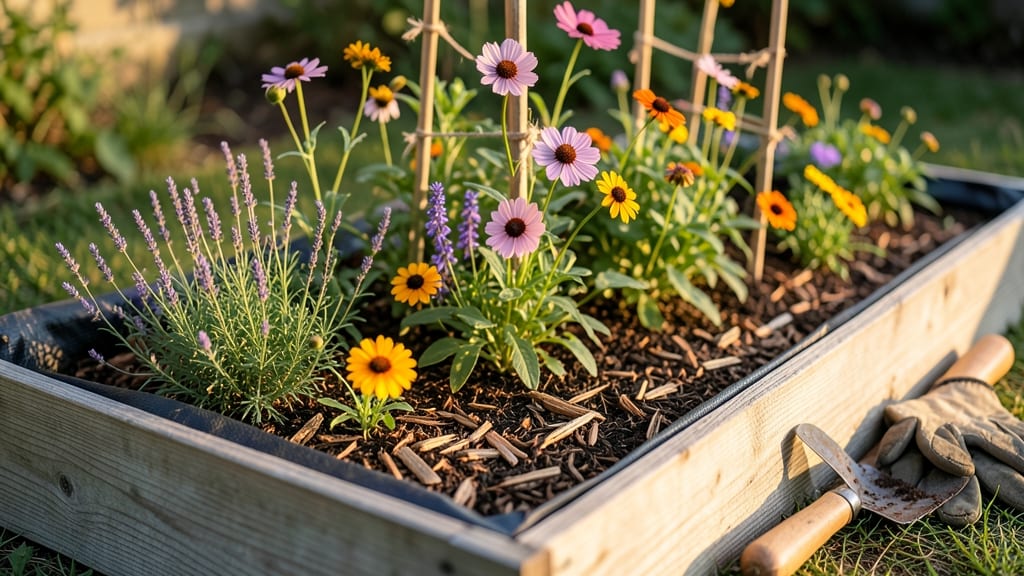
A raised bed flower garden layout creates visual harmony by arranging plants in three distinct layers: tall perennials at the back for structure, mid-height annuals in the center for seasonal pops of color, and low-spreading ground covers at the front to fill gaps. Group sun-loving varieties together while shielding shade-sensitive plants to ensure each gets the right light conditions for thriving blooms.
A well-structured raised bed flower garden layout transforms a simple plot into a dynamic, year-round showcase. 🌸 The back row should feature tall perennials like delphiniums or hollyhocks, which provide vertical interest while casting light shade for mid-height plants below.
In the center, mix annuals with staggered bloom times, such as zinnias for summer and pansies for early spring, to keep color flowing. The front layer can include spreading ground covers like creeping thyme or ajuga to prevent weeds and add texture.
This tiered approach isn't just about looks—it also improves airflow and sunlight distribution, helping every plant reach its full potential.
What sets this layout apart is the focus on seasonal transitions. By pairing perennials with reliable blooms (like coneflowers) alongside annuals that thrive in specific seasons, you create a garden that never looks bare.
For example, planting spring bulbs like daffodils in the front layer ensures early color, while late-summer bloomers like black-eyed Susans take over as the season progresses. This strategic layering turns maintenance into a breeze while keeping your garden vibrant from spring through fall.
💡 In This Article
- Designing Sunlight and Height Zones in Flower Raised Beds
- Season-Long Bloom Planning for Continuous Color
Designing sunlight and height zones in flower raised beds
The foundation of any successful raised bed flower garden starts with sunlight mapping. Most flowers thrive in 6-8 hours of direct sun daily, but some—like impatiens or astilbe—prefer partial shade (3-6 hours of sun). Begin by measuring your bed's sunlight exposure at different times of day.
For example, the south-facing side typically receives the most intense light, making it ideal for sun-lovers like black-eyed Susans or lavender. Meanwhile, the north-facing side may only get morning sun, perfect for shade-tolerant heuchera or ferns.
This zoning prevents competition for light and ensures each plant gets its ideal conditions.
Height layering isn't just about aesthetics—it's a functional system that improves airflow and light penetration. Start with tall perennials (4-6 feet) like delphiniums or hollyhocks at the back, which act as vertical sun screens for shorter plants.
In the middle, place mid-height annuals (2-3 feet) such as zinnias or cosmos, which bloom prolifically in full sun but won't overshadow the front layer.
The front row should feature low-spreading plants (under 1 foot) like creeping phlox or ajuga, which cascade over the bed's edge while suppressing weeds. This structure mimics natural ecosystems, where taller plants provide shade and shelter for smaller species below.
What most gardeners overlook is how plant placement affects microclimates within the bed. For instance, placing foliage plants like hostas near the center creates a cooler, more humid environment that benefits shade-loving annuals like begonias. Conversely, grouping succulents or lavender together in the sunniest spots reduces moisture competition.
The key is to arrange plants so their canopy heights gradually decrease from back to front, creating a natural gradient that guides the eye while optimizing light exposure for each layer.
Consider the root zone depth when selecting plants for each layer. Tall back-row perennials often have deep taproots (like peony roots that extend 2-3 feet down), while front-row ground covers have shallow, fibrous roots.
This vertical stratification prevents root competition and allows each plant to access the nutrients and moisture at its preferred depth. For example, pairing deep-rooted coneflowers at the back with shallow-rooted thyme in the front ensures both thrive without stealing resources from each other.
Seasonal light changes also play a role. In late summer, when the sun is lower in the sky, plants at the front of the bed may receive only 2-3 hours of direct light—perfect for shade-tolerant annuals like sweet alyssum. Meanwhile, the back row remains in full sun year-round.
This dynamic means you can rotate plants seasonally: Move sun-loving annuals to the front in spring when sunlight is intense, then shift them to the back in fall when light is gentler. This flexibility extends your garden's productivity and visual appeal across all seasons.
Pro tip: Use reflective mulch like white gravel in the back row to bounce extra light onto shade-prone plants in the front. This simple trick can increase light exposure by 10-15% without adding bulk to your design.
Pair this with drip irrigation zoned by height—tall plants need deeper watering, while front-row plants prefer surface moisture—to create a self-sustaining ecosystem that thrives with minimal intervention.