
Tools
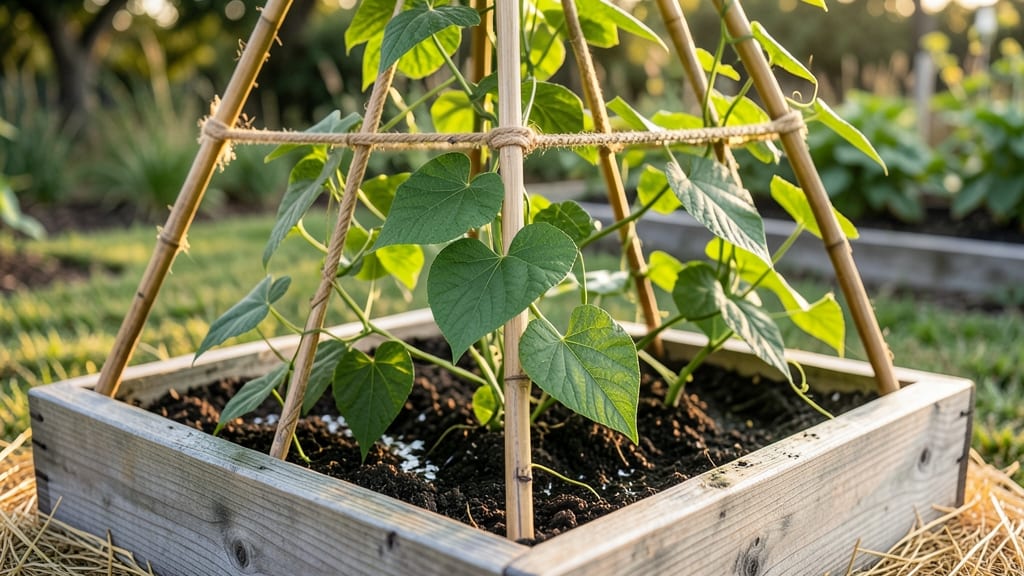
A raised bed green bean trellis turns sprawling vines into vertical productivity. 🌱 I used to waste precious garden space on bush beans that flopped everywhere—until I built a simple teepee trellis that doubled my harvest in the same footprint.
The right support keeps beans off the ground, improves airflow, and makes picking easier. You’ll need just 3-4 sturdy stakes (bamboo works great) and twine or chicken wire for the framework. For a 4x8-foot raised bed, place stakes at each corner and weave twine between them in a crisscross pattern.
Pole beans climb naturally, while bush beans stay contained without sprawling. By mid-summer, you’ll see lush vines reaching toward the sky, producing more pods per plant than flat-growing varieties. The trellis also keeps beans cleaner and reduces disease risk from soil contact.
Plus, kids love reaching up to pick fresh beans! Works for any raised bed size—just scale the trellis height and spacing. Here’s how to get started without overcomplicating it.
📚 In This Guide
- What you need
- Instructions
- Tips and common mistakes
- Wrapping up and next steps
What you need
- ● Trellis Structure: 4–6 bamboo stakes (5–6 ft tall, ½-inch diameter) or 4 wooden posts (4x4 inches, 6 ft long)
- ● 1 roll jute twine (100+ ft) or 1 spool plastic-coated wire (14-gauge, 100+ ft)
- ● 1–2 crossbars (1x2-inch wood, 4–6 ft long, depending on bed size)
- ● Raised Bed: Pre-assembled raised bed frame (4x8 ft recommended) or untreated lumber (2x6 or 2x8, 8 ft long, 4 pieces)
- ● Landscape fabric (4x8 ft) or hardware cloth (to deter pests)
- ● Green Beans: Pole bean seeds (e.g., Kentucky Wonder, Blue Lake) or young seedlings (4–6 plants per trellis)
- ● Measuring tape
- ● Drill/driver + 2-inch deck screws (for wood trellis)
- ● Staple gun (for securing landscape fabric)
- ● Scissors/wire cutters
- ● Post-hole digger (if anchoring stakes)
- ○ Optional: Galvanized nails (for bamboo stakes) or zip ties (for extra wire support)
- ● Sunny location (6+ hours of sunlight daily)
- ● Well-draining soil (mix compost into raised bed for nutrients!)
- ● Watering can/hose (for consistent moisture)
How to build a raised bed green bean trellis for maximum yield
Here's the simple method I use to turn a 4'x8' raised bed into a vertical green bean powerhouse.
🪴 Step 1: Choose and Install Your Trellis Structure
For green beans, I recommend a T-post trellis—it's sturdy, easy to install, and lets beans climb naturally. Drive 4-foot T-posts into the corners of your raised bed, spacing them 4 feet apart along the long sides. Use a level to ensure they're perfectly vertical before pounding them in 6-8 inches deep. This creates a stable frame for your beans to climb.
For a 4'x8' bed, you'll need 4 posts total—two on each long side. I like to add horizontal 2x4 supports at 2-foot intervals between posts for extra stability, especially if you're growing pole beans that can get heavy. Secure these with galvanized screws to prevent rust and ensure your trellis lasts multiple seasons.
🌱 Step 2: String or Wire the Climbing Support
Use 1/4-inch galvanized wire or jute twine to create a zigzag pattern between the posts. Start at the bottom of the trellis and space the strings 6-8 inches apart vertically. This gives the beans plenty of handholds to climb. For a 4-foot trellis, you'll need 5-6 horizontal wires total—one at the base and the rest spaced evenly up the frame.
I like to leave 6-8 inches of slack between the bed and the first wire to prevent soil splatter from damaging the beans as they grow. If using wire, bend it into a loop at each post to keep it secure. For a softer option, tie the twine tightly with knots every 12 inches to prevent sagging under the weight of mature plants.
☀️ Step 3: Plant Beans Along the Trellis for Even Growth
Sow seeds 1 inch deep and 4 inches apart right next to the trellis strings. For a 4'x8' bed, you'll plant two rows—one on each long side—keeping them 12 inches away from the bed's center to allow airflow. I like to plant in a staggered pattern so the beans don’t all reach the trellis at once, which prevents overcrowding.
Water deeply after planting to settle the soil and encourage root growth. Within 7-10 days, you’ll see the first true leaves—this is your signal to start fertilizing lightly with a balanced 10-10-10 to support climbing. Beans need full sun (6+ hours daily), so position your trellis where it gets morning sun and afternoon shade if your climate runs hot.
🌿 Step 4: Train Vines and Maintain the Trellis
As the beans grow, gently guide the vines toward the trellis strings. You don’t need to tie them—just weave them through the zigzag pattern as they climb. If a vine strays too far from the trellis, trim it back to encourage stronger growth on the supported stems. This keeps the plants upright and productive instead of sprawling.
Check the trellis weekly for stability, especially after rain. If the strings sag or the posts shift, tighten the wire or add extra supports before the beans get too heavy. Mulch around the base of the plants with 2 inches of straw to retain moisture and prevent weeds—this is especially important in raised beds where soil dries out faster.
✂️ Step 5: Harvest and Prune for Continuous Production
Green beans are ready to harvest when pods are 4-6 inches long and crisp. I pick every 2-3 days to encourage more production—if you wait too long, the beans toughen up and the plant focuses on seed production instead. Always harvest from the bottom up, cutting or snapping pods just above the leaf node to avoid damaging the vine.
After the first harvest wave, prune back any dead or overcrowded vines to improve airflow. This reduces disease risk and lets the remaining plants get more sunlight. If your beans start to yellow or wilt, check for aphids or spider mites—spray with neem oil if needed. With proper care, a well-supported trellis can produce harvests for 6-8 weeks in one season.
Tips & tricks for building a sturdy raised bed green bean trellis
Here's what I learned after testing different trellis designs for my own raised beds.
Stability is Everything: When installing your 4-foot T-posts, pound them at least 6-8 inches deep—any less and they'll wobble when beans get heavy. I use a rubber mallet for the first few taps to avoid damaging the posts, then switch to a hammer for the final depth. For extra security, especially in windy areas, add two horizontal 2x4 supports between each pair of posts—this creates a ladder-like structure that won't flex under weight.
Wire vs. Twine Decision: Galvanized wire creates a more permanent structure that lasts multiple seasons, but jute twine offers a biodegradable option that breaks down naturally. If using twine, I recommend 3-ply jute—it's stronger than regular twine and won't fray as quickly. For wire, 1/4-inch diameter is ideal; thinner wire can stretch over time, while thicker wire is harder to work with. Bend the wire into loops at each post to prevent slipping.
Planting Pattern Matters: The staggered planting pattern mentioned in Step 3 isn't just about aesthetics—it prevents all vines from reaching the trellis at once. Plant every other seed slightly closer to the trellis (about 3 inches instead of 4 inches) to create a gradual climb. This ensures even distribution of plants along the trellis and prevents overcrowding at the base where vines first attach. I mark planting spots with small sticks before dropping seeds to maintain consistency.
Maintenance Shortcuts: Instead of checking the trellis weekly for stability, I set a reminder to inspect after every heavy rain and once when plants reach 3 feet tall. These are the two critical moments when structural stress occurs. For quick repairs, I keep a small roll of zip ties handy to reinforce sagging wires—just wrap them around the wire and post without cutting into the plant stems. This prevents the need for complete rebuilds during the growing season.
Pro Tips for Raised Bed Green Bean Trellis
- Here's what I learned after testing different trellis designs for my own raised beds.
- Stability is Everything: When installing your 4-foot T-posts, pound them at least 6-8 inches deep—any less and they'll wobble when beans get heavy.
- Wire vs.
Frequently asked questions
Got questions about setting up a raised bed green bean trellis? You’re not alone!
Here are answers to the most common concerns—from setup to troubleshooting—so you can grow like a pro.
What’s the best material for a raised bed green bean trellis?
A sturdy, lightweight material like bamboo stakes, metal cages, or PVC pipes works best. Avoid flimsy wood that may rot quickly. For a budget-friendly option, try chicken wire or mesh panels—just ensure they’re tall enough (5–6 feet) to support climbing varieties like Kentucky Wonder or Blue Lake.
When should I install the trellis in my raised bed?
Set up your trellis before planting—ideally 2–3 weeks ahead—so the soil has time to settle and roots can grow near the support. For cool-season beans, plant seeds 1–2 inches deep right next to the trellis. If using warm-season varieties, wait until soil temps hit 60°F+ before sowing.
Can I reuse a trellis for multiple growing seasons?
Yes! Metal or PVC trellises last years with minimal upkeep. Clean them after harvest to remove debris and prevent mold. Wooden or bamboo supports may need replacing every 2–3 seasons due to rot. Store unused trellises in a dry place to extend their lifespan.
What if my green beans aren’t climbing the trellis?
Check these fixes:
- Thin seedlings—overcrowding stresses vines. Leave 4–6 inches between plants.
- Train vines early by gently weaving them through the trellis as they grow.
- Ensure full sun (6+ hours/day)—shady spots weaken climbing ability.
- Fertilize lightly with compost or a balanced 10-10-10 mix if growth stalls.
Are there trellis alternatives for small raised beds?
Try:
- Tower gardens: Use 5-gallon buckets with cut-out sides as vertical supports.
- DIY teepees: Bundle 4–5 bamboo stakes in a cone shape (great for patio gardens!).
- Hanging nets: Suspend a mesh or wire net over the bed for pole beans.
Wrapping up and next steps
Building a raised bed green bean trellis is a game-changer for small gardens—maximizing space while boosting yields with vertical growth! 🌱 Whether you’re a beginner or a seasoned gardener, this simple setup transforms your beans into a lush, productive vine. Ready to dive in?
Your next step? Grab your materials, sketch a design, and start building! Once your trellis is up, watch your green beans climb, thrive, and reward you with a bountiful harvest. Happy gardening! 🌟