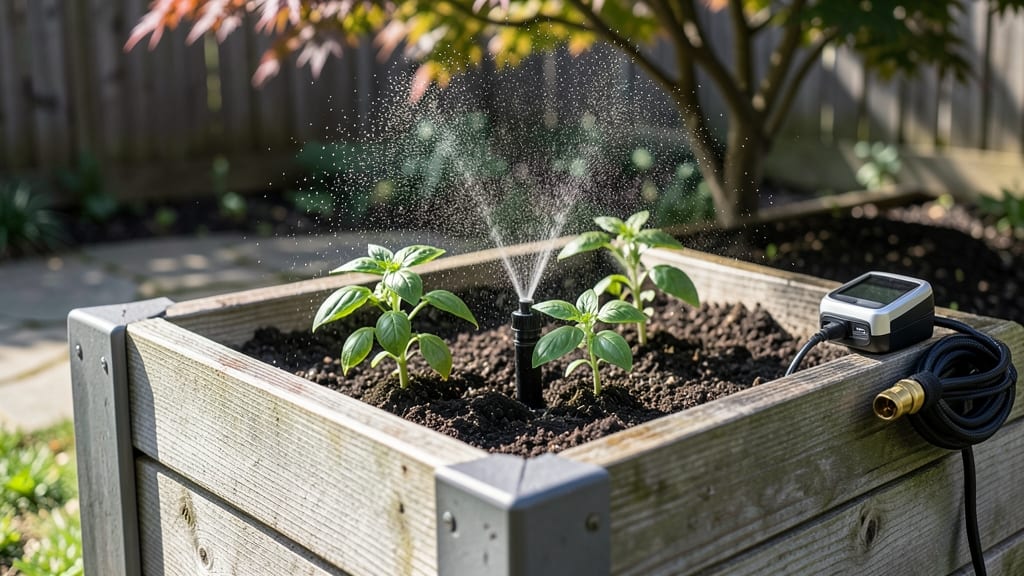
Buying guide: how to choose the right raised bed sprinkler
1. Water Coverage Area 💡
First, measure your raised bed dimensions—this determines the coverage area your sprinkler must deliver. For standard 4’x8’ raised beds, opt for a sprinkler with a 10–12 ft throw to ensure full coverage without gaps.
Counterintuitively, smaller beds (under 4’x4’) benefit from micro sprinklers with 3–6 ft coverage to avoid overspray. Always check the spray pattern (360° for even distribution or 180° for targeted watering).
For long, narrow beds, a rotating oscillating sprinkler works best, while square beds pair well with fixed-pattern micro sprinklers. Pro tip: Test the sprinkler’s coverage by placing a white towel in the bed—if water streaks appear uneven, adjust the height or angle.
2. Flow Rate & Water Efficiency ⚡
The flow rate (GPM) directly impacts water waste and plant health. Low-flow sprinklers (0.3–0.5 GPM) are ideal for shallow raised beds (under 12” deep) to prevent runoff, while higher-flow models (0.6+ GPM) suit deeper beds with thirsty plants like tomatoes or corn.
I recommend pressure-compensating sprinklers for uneven terrain—they adjust flow automatically. For drip irrigation systems, pair your sprinkler with a flow restrictor to fine-tune output. A surprising tip: Ultra-low-flow sprinklers (0.1–0.3 GPM) work surprisingly well for seedling trays or hydroponic setups, delivering precise moisture without overwatering delicate roots.
3. Material Durability & Longevity ✅
Plastic sprinklers may seem cheap, but they crack under UV exposure and corrode in wet climates. Invest in stainless steel or brass for rust resistance and decades of use. For budget-friendly options, look for PVC-compatible sprinklers with galvanized threads—they’re lightweight yet durable.
If you’re using automated timers, ensure the sprinkler’s thread size (½” NPT) matches your system. A hidden gem: Brass sprinklers may cost more upfront but never degrade like plastic, saving you replacement costs long-term. For saltwater-prone areas, opt for marine-grade stainless steel to extend lifespan.
4. Compatibility with Your Irrigation System 🔍
Not all sprinklers fit existing setups! Check thread type (½” NPT, ¾” hose threads) and hose adapter needs. For drip irrigation, use a sprinkler-to-drip converter to integrate seamlessly. If you’re using a timer or smart controller, verify voltage compatibility (most work with 120V AC or battery-powered systems).
A common mistake? Assuming all sprinklers fit standard ½” PVC pipes—some require special adapters. For DIY setups, PVC-compatible sprinklers with slip-fit connectors are easiest to install. Pro move: Test-fit your sprinkler with a hose adapter before committing to avoid costly returns.
5. Automation & Smart Features 🛡️
Automation saves time, but not all sprinklers play nice with timers. Mechanical timers work with most, but smart controllers (like Rachio or Orbit) require Wi-Fi-enabled sprinklers or compatible adapters.
For budget setups, a 24-hour mechanical timer (like the one in our Best Value pick) is a game-changer—just set it and forget it. If you’re tech-savvy, app-controlled sprinklers let you monitor water usage remotely. A lesser-known tip: Solar-powered timers eliminate wiring hassles for off-grid gardens.
Always check battery life if opting for wireless models.
Frequently asked questions
Q: What size raised bed sprinkler do I need for my garden?
Your sprinkler’s coverage area should match your raised bed dimensions. For standard 4’x8’ beds, choose a sprinkler with a 10–12 ft throw for full coverage. Smaller beds (under 4’x4’) need micro sprinklers with 3–6 ft coverage to avoid overspray. Always check the spray pattern—360° oscillation works best for even distribution, while 180° fixed patterns suit targeted watering. For long, narrow beds, an oscillating sprinkler ensures uniform moisture without gaps.
Q: Can I use a raised bed sprinkler with an existing irrigation system?
Yes, but thread compatibility is key. Most sprinklers use ½” NPT threads, but always verify with your hose adapter or PVC pipes. For drip irrigation systems, use a sprinkler-to-drip converter to integrate seamlessly. If using a timer or smart controller, ensure voltage compatibility (most work with 120V AC or battery-powered setups). For DIY setups, PVC-compatible sprinklers with slip-fit connectors make installation easier.
Q: Why isn’t my raised bed sprinkler watering evenly?
Uneven watering often stems from incorrect height or angle. Adjust the sprinkler so it’s 6–12 inches above the soil for optimal distribution. If using an oscillating sprinkler, ensure it’s level to avoid uneven arcs. Low water pressure can also cause weak spray—check for clogs or restrictors in the hose. For shallow beds, a low-flow sprinkler (0.3–0.5 GPM) prevents runoff, while higher-flow models (0.6+ GPM) suit deeper soil.
Q: What’s the difference between an oscillating sprinkler and a micro sprinkler?
1
Oscillating sprinklers
rotate 360° for broad coverage, ideal for large raised beds (4’x8’+) and even moisture distribution. Micro sprinklers, however, deliver precise, low-volume water (0.1–0.3 GPM) in a fixed pattern, perfect for seedling trays, small beds, or delicate plants. Oscillating models work best for automated systems, while micro sprinklers excel in targeted watering with minimal waste.
Q: Is a budget-friendly raised bed sprinkler worth the investment?
if it meets your needs! Budget-friendly options (like our Best Value pick) offer adjustable spray patterns and timers for automation without breaking the bank. They’re ideal for small gardens, herb beds, or seedling trays. For long-term durability, invest in stainless steel or brass—they resist rust and last years longer than plastic. If you’re a beginner or have limited space, a low-cost micro sprinkler is a smart, efficient choice.
Q: How long do raised bed sprinklers typically last?
Durability depends on materials and maintenance. Plastic sprinklers may last 1–2 seasons before cracking, while stainless steel or brass models can last 5–10+ years with proper care. To extend lifespan, store indoors during winter, clean clogs regularly, and avoid high-pressure hoses. Premium sprinklers (like our Classic Essential pick) are built for decades of use, making them a long-term investment for serious gardeners.
Q: What’s a good alternative if I don’t want a traditional sprinkler?
Consider drip irrigation systems or soaker hoses for water efficiency and targeted moisture. Drip kits (like our Best Value pick) deliver water directly to roots, reducing waste and preventing fungal diseases. For ultra-precise watering, hydroponic sprayers or ebay pots work well in small raised beds. If you prefer hands-free automation, a smart irrigation controller paired with a low-flow sprinkler offers Wi-Fi-enabled scheduling—perfect for tech-savvy gardeners.
★★★★★4.7(9 reviews)