
Planting
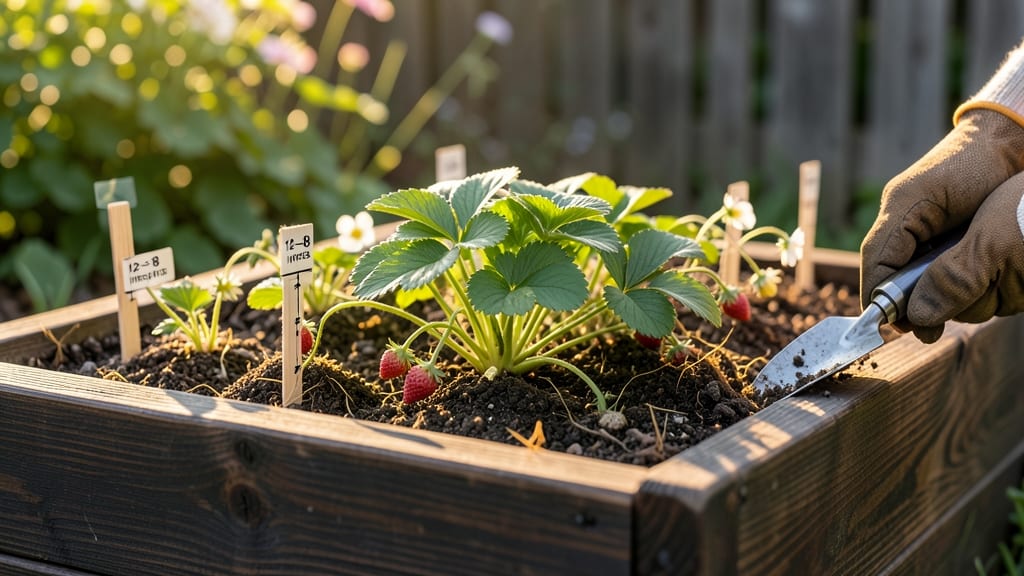
Raised bed strawberry plant spacing of 12-18 inches apart is the secret to lush, high-yielding berries—this isn’t just a guess, it’s the sweet spot that balances airflow, sunlight, and root growth for maximum fruit production. 🌱 I learned the hard way when my first bed produced tiny, sour berries because I crammed plants too close together. The right spacing means bigger fruit, fewer diseases, and easier harvesting—no more bending over to pick berries that got lost in the foliage.
June-bearing varieties need the full 18 inches between plants to develop properly, while everbearing and day-neutral types can handle 12-14 inches—their smaller size lets them share space more easily.
Soil depth matters too: raised beds should be at least 10 inches deep to accommodate those sprawling roots, and wider than 4 feet so you can reach the center without stepping on the plants. Mulch heavily with straw or leaves to keep berries clean and soil moist.
What you’ll end up with is a raised bed that looks like a lush green carpet by summer, with berries so plentiful you’ll need jars and freezer space to handle them all.
The key is pruning old leaves after harvest (June-bearers) and thinning runners to prevent overcrowding—both tricks I wish I’d known from the start. This layout works for small urban beds or large backyard plots, and it’s the foundation of every high-yielding strawberry garden I’ve seen.
Pro tip: mark your spacing with sticks or a simple grid before planting—trust me, you’ll thank yourself when you’re not guessing where each plant belongs. And if you’re short on space, try vertical trellising for everbearing types to save even more room.
The science is simple: give them space, and they’ll reward you with berries big enough to share with the neighbors.
📚 In This Guide
- What you need
- Instructions
- Tips and common mistakes
- Wrapping up and next steps
What you need
- ● Raised bed frame: Wooden, metal, or composite (minimum 4’ x 8’ for spacing efficiency; height: 6–12 inches).
- ● Quality soil mix: 60% topsoil, 30% compost, and 10% perlite/sand (sterilized to avoid disease). ~1 cubic yard per 4’ x 8’ bed.
- ● Strawberry plants: June-bearing: 12–15 plants (spaced 12–18 inches apart in rows).
- ● Ever-bearing/day-neutral: 20–25 plants (spaced 6–12 inches apart in staggered rows).
- ● Mulch: Straw or black plastic (2–3 inches thick to retain moisture and suppress weeds).
- ● Drip irrigation or soaker hose: For consistent watering (avoid overhead sprinklers).
- ● Gloves & knee pads: For comfortable planting.
- ● Measuring tape & stakes: To mark rows and spacing.
- ● Fertilizer: Balanced organic (10-10-10) or compost tea for slow-release nutrients.
- ● Row covers: Frost cloth to extend the growing season.
- ● Plant labels: To track varieties (especially if mixing types!).
- ● Pruners: For trimming runners and dead foliage.
- ● Soil pH test kit: Aim for 5.5–6.5 (strawberries are fussy!).
Step-by-step guide to perfect raised bed strawberry spacing
Here’s the spacing method I’ve used for years to maximize berries while keeping plants healthy and easy to maintain.
🌱 Step 1: Plan Your Raised Bed Layout for Optimal Airflow
Strawberries need 12-18 inches of space between plants in a raised bed to prevent disease and encourage strong root growth. I arrange mine in a staggered grid pattern—think of a brick wall layout—so each plant gets equal sunlight exposure. This also makes harvesting easier since you won’t have to reach over crowded rows.
For a 4-foot wide bed, I plant 3 rows with 12-inch spacing between plants and 18-inch spacing between rows. This gives me about 12 plants per 4x8-foot bed, which is perfect for a family of four. Mark your spacing with sticks or a string line before planting to avoid guesswork later.
🌱 Step 2: Position Plants for Sun and Soil Access
Place the first row of plants about 6 inches from the bed’s edge so roots have room to spread without hitting the sides. Strawberries thrive in full sun (6-10 hours daily), so avoid planting in deep shade or areas where neighboring plants will cast long shadows. If your bed runs north-south, you’ll get even sunlight distribution across all rows.
Dig a small hole for each plant—just deep enough to cover the roots without burying the crown. Gently spread the roots outward before backfilling with soil. This encourages a wider root system right from the start, which means bigger berries later. Water lightly after planting to settle the soil around the roots.
💧 Step 3: Mulch and Maintain Spacing as Plants Mature
Spread a 2-3 inch layer of straw mulch around each plant, leaving a 2-inch gap around the crown to prevent rot. Mulch keeps soil moist, suppresses weeds, and protects berries from dirt splatter. Replenish mulch every few weeks as it breaks down—this is key to preventing soil-borne diseases like gray mold.
As plants grow, you might notice runners (long stems with baby plants) creeping into your spacing. Here’s where most gardeners mess up: don’t let runners take over. Pin them down if you want more plants, but remove any that grow into your designated spacing. Overcrowding leads to smaller berries and more pests.
✂️ Step 4: Prune and Thin for Long-Term Productivity
In late winter or early spring, remove any dead or weak leaves to redirect energy to fruit production. I also thin out crowded plants to maintain 12-inch spacing—this might mean pulling a few out entirely if they’re competing for space. Healthy strawberries have bright green leaves and firm, upright stems. Yellowing or wilted leaves signal overcrowding or disease.
After your first harvest, side-dress with compost or balanced fertilizer (10-10-10) to replenish nutrients. Strawberries are heavy feeders, and proper spacing means each plant gets enough resources to produce larger, sweeter berries. Water deeply 1-2 times per week, aiming for 1 inch of water per week—more in extreme heat.
🌿 Step 5: Rotate and Renew for Continued Bounty
Strawberries decline after 3-4 years, so plan to replace every other year. When you do, rotate crops—don’t replant strawberries in the same spot. Instead, follow with a green manure crop like clover to restore soil health. I mark my bed layout with stakes so I can reuse the same spacing pattern for new plants.
This system has given me consistent harvests for over a decade**. The key is sticking to the spacing from day one—it’s easier than retrofitting later. Plus, you’ll spend less time fighting pests and diseases when plants aren’t competing for every scrap of sunlight and soil.
Tips & tricks for perfect raised bed strawberry layouts
These practical insights will help you avoid common spacing mistakes and maximize your strawberry harvest.
Spacing Precision: Use a tape measure and mark your 12-inch spacing between plants with small stakes or a string line. I've found that even a 2-inch difference can lead to overcrowding, which reduces berry size and increases disease risk. For the 18-inch row spacing, consider using a garden hose laid out in a zigzag pattern—it creates perfect curves for your staggered layout.
Sunlight Strategy: The 6-10 hours of daily sunlight requirement is non-negotiable for optimal fruit production. If your bed runs east-west, you'll notice shadows cast by taller plants in the afternoon. To fix this, plant taller varieties on the north side of your bed and shorter ones on the south side, creating natural shade for smaller plants.
Mulch Maintenance: That 2-3 inch layer of straw mulch needs regular attention—especially after heavy rains. I check my mulch every 2-3 weeks and replenish it to maintain that protective barrier. Pro tip: Use a rake to fluff the mulch rather than adding fresh straw directly, which helps prevent compacting that can suffocate plant roots.
Runner Management: When those runners start creeping into your spacing, don't just cut them off—pin them down with small rocks or U-shaped stakes if you want to propagate new plants. But be ruthless about removing any runners that actually grow into your designated spacing. I've seen gardens go from thriving to struggling in just one season when runners took over.
Pro Tips for Raised Bed Strawberry Plant Spacing
- These practical insights will help you avoid common spacing mistakes and maximize your strawberry harvest.
- Spacing Precision: Use a tape measure and mark your 12-inch spacing between plants with small stakes or a string line...
- Sunlight Strategy: The 6-10 hours of daily sunlight requirement is non-negotiable for optimal fruit production. If yo...
Frequently asked questions
Got questions about spacing your strawberry plants in raised beds?
You’re not alone! Here are answers to the most common queries to help you grow a thriving patch.
How close can I plant strawberries in a raised bed?
For June-bearing varieties, space plants 12–18 inches apart in rows 2–3 feet apart. Ever-bearing or day-neutral types can be planted slightly closer—10–12 inches apart—since they produce smaller berries and need less airflow. Overcrowding leads to poor fruit quality and disease.
When is the best time to plant strawberries in a raised bed?
Plant in early spring (as soon as soil is workable) or late summer/early fall (4–6 weeks before first frost). Avoid planting in mid-summer heat—transplants struggle to establish roots. Cool soil and mild temps help them thrive faster!
Can I plant strawberries closer if I use mulch?
Mulch (straw or pine needles) improves spacing flexibility, but don’t skimp on airflow. Even with mulch, maintain at least 10 inches between plants to prevent fungal diseases like gray mold. Mulch suppresses weeds and retains moisture—just keep it 2–3 inches deep around plants.
What if my strawberries aren’t fruiting well despite proper spacing?
Check these fixes:
- Light: Strawberries need 6+ hours of sun daily. Move to a sunnier spot if needed.
- Soil: Test pH (ideal: 5.5–6.5). Amend with compost if soil is poor.
- Water: Keep soil consistently moist (not soggy) during flowering/fruiting.
- Age: June-bearing plants decline after 3–4 years—replace them!
Can I mix strawberries with other plants in a raised bed?
Yes! Try companion planting with:
- Spinach or lettuce (shade-tolerant, early harvesters)
- Bush beans (fix nitrogen in soil)
- Thyme or borage (repel pests naturally)
Avoid planting near potatoes, mint, or onions—they compete for nutrients or stunt growth. Keep herbs/strawberries at least 12 inches apart for best results.
Wrapping up and next steps
Perfecting your raised bed strawberry plant spacing is the secret to a thriving, productive garden! 🌱 By following science-backed layouts—like the 12-inch spacing for June-bearing or the 18-inch grid for everbearing varieties—you’ll maximize airflow, sunlight, and yield.
Now that you’re armed with the right knowledge, it’s time to roll up your sleeves and create your dream strawberry patch.
Ready to take the next step? Sketch your bed design, gather your supplies, and start planting—your future harvest (and happy taste buds!) will thank you. Happy gardening! 🍓✨