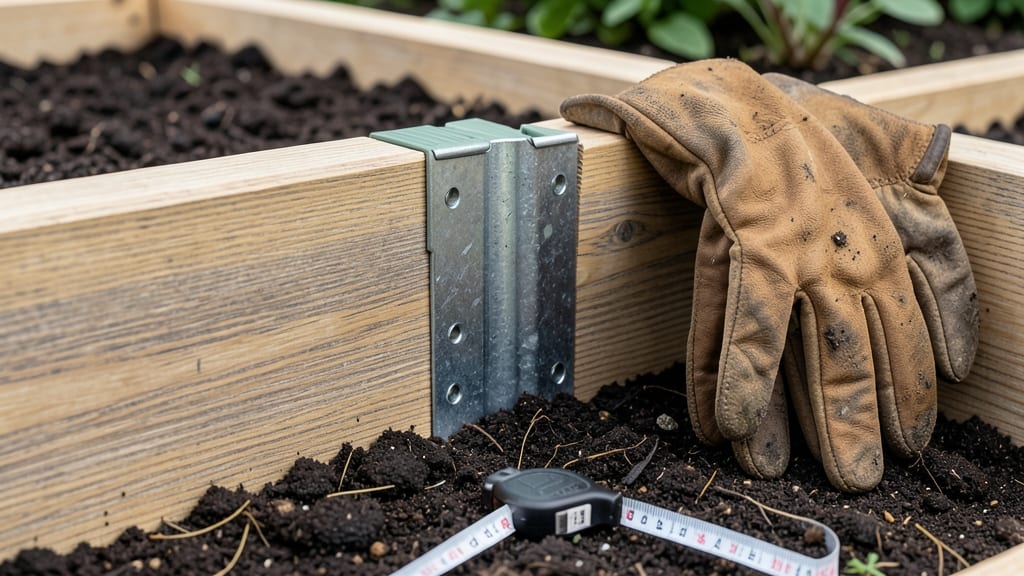
| Interlocking Design |
Tool-free snap connections |
Buying guide: how to choose the right raised garden bed connectors
1. Material Durability and Weather Resistance 💡
Material choice determines how long your connectors will last and how well they resist the elements. Galvanized steel and aluminum are the most durable, offering corrosion resistance and longevity, making them ideal for harsh climates or long-term projects. If you're on a budget, high-quality plastic connectors can work well in mild climates but may degrade faster under extreme sun or moisture. For a rustic look, wooden connectors blend seamlessly with natural beds but require regular maintenance to prevent rot. I recommend choosing materials that match your climate—steel or aluminum for wet or salty areas, and plastic or wood for drier regions.
2. Compatibility with Lumber Sizes ⚡
Not all connectors fit every lumber size, so check whether they’re designed for 2x4, 2x6, or composite materials. Most interlocking systems work with standard dimensions, but some budget-friendly corner brackets may only fit one size.
If you're building a custom-shaped bed, look for adjustable or modular connectors that can accommodate varying widths. I’ve found that pre-drilled holes in metal or plastic connectors save time during assembly, while wooden joints often require precise cuts.
Always measure your lumber before buying to avoid mismatches—this is a common pitfall that leads to wasted time and materials.
3. Ease of Assembly and Interlocking Mechanism ✅
The best connectors simplify assembly, not complicate it. Look for systems with tool-free interlocking designs, such as snap-together plastic or precision-machined metal joints. These eliminate the need for constant measuring and screwing, making assembly faster and more frustration-free.
For beginners, L-shaped corner brackets are the easiest to use, while advanced systems like mortise-and-tenon wooden joints require more skill. I recommend testing a few connectors on scrap wood before committing to a full project—this helps you gauge how smoothly they fit together.
Counter-intuitively, some "premium" systems can be trickier to assemble than budget options, so prioritize user reviews on ease of use.
4. Adjustability for Uneven Ground or Custom Shapes 🔍
Even the flattest yard can have subtle dips or slopes, and your garden bed should account for them. Connectors with adjustable joints or leveling features (like threaded rods or flexible brackets) make it easier to compensate for uneven terrain.
For custom-shaped beds, look for modular systems that allow you to mix and match connectors at different angles. If you’re building on a slope, I suggest choosing connectors with height-adjustable bases—this prevents warping and ensures your bed stays stable.
Avoid rigid systems if your ground isn’t perfectly level, as they can cause stress on the lumber and lead to premature failure.
Frequently asked questions
Q: What are raised garden bed connectors and why do I need them?
1
Raised garden bed connectors
are hardware components that secure the corners and edges of your garden bed, ensuring stability, proper alignment, and longevity. Without them, your bed may shift, warp, or even collapse over time—especially if built on uneven ground or exposed to weather. I recommend using connectors for any bed taller than 12 inches or made from untreated wood, as they prevent sagging and maintain a square shape. For smaller beds or composite materials, they still help streamline assembly and improve drainage.
Q: Will these connectors work with my existing lumber (e.g., 2x4, 2x6, cedar, or composite)?
Most interlocking connectors are designed to work with standard lumber sizes like 2x4 and 2x6, but compatibility varies by material. Galvanized steel and aluminum connectors are the most versatile, fitting wood, composite, and even metal framing. For plastic connectors, check the product specs—some are limited to 2x4s, while others accommodate wider boards. If using cedar or redwood, opt for stainless steel or coated metal connectors to prevent corrosion. Always measure your lumber before purchasing to avoid mismatches.
Q: How do I assemble raised garden bed connectors for the first time?
Start by laying out your lumber in a square or rectangle, then attach the connectors to the inner corners of each board. For interlocking systems, align the tabs and press firmly until they click into place. If using L-shaped brackets, secure them with galvanized or stainless steel screws (included in some kits). Pro tip: Pre-drill pilot holes to prevent wood splitting. For uneven ground, use adjustable connectors or shims to level the base before securing everything. Watch a quick YouTube tutorial if you’re unsure—visual guidance helps!
Q: What’s the difference between metal, plastic, and wooden connectors?
The choice depends on your budget, climate, and project needs. Metal connectors (galvanized steel or aluminum) are the most durable, resisting rust and warping, but they’re pricier. Plastic connectors are lightweight, budget-friendly, and easy to assemble but may degrade in extreme heat or moisture. Wooden connectors offer a rustic look and blend with natural beds but require maintenance to prevent rot. I recommend metal for long-term use, plastic for beginners, and wood for aesthetic projects in dry climates.
Q: Are interlocking connectors worth the investment over basic corner brackets?
if you prioritize stability and ease of assembly. Interlocking systems eliminate wobble, reduce assembly time, and often require fewer tools. Basic L-shaped brackets are cheaper but need screws and may loosen over time. For mid-range to premium budgets, interlocking connectors save effort and prevent misalignment—ideal for larger beds or uneven terrain. If you’re building a small, simple bed, brackets may suffice, but for long-term durability, I always recommend interlocking designs.
Q: How long do raised garden bed connectors typically last?
With proper installation, metal connectors last 5–10+ years, especially in galvanized steel or aluminum. Plastic connectors may last 3–5 years in mild climates but can degrade faster with UV exposure or moisture. Wooden connectors depend on the wood type—cedar or redwood can last 5+ years if treated, while untreated wood may rot in 2–3 years. To extend lifespan, avoid over-tightening screws, use weather-resistant materials, and elevate beds off the ground to prevent moisture damage.
Q: What’s a good budget-friendly alternative to high-end interlocking systems?
For a cost-effective solution, try plastic interlocking corner systems or basic L-shaped brackets with stainless steel screws. These options are budget-friendly but still provide stability for small to medium beds. If you need extra reinforcement, pair them with landscape fabric under the bed to prevent shifting. Avoid ultra-cheap brackets—they often require constant adjustments and may not hold up in wind or rain. For a mid-range upgrade, galvanized steel connectors offer durability without breaking the bank.
★★★★★4.9(9 reviews)
|