
Landscaping

Transform your garden into a vibrant spring masterpiece with these bold tulip flower bed designs. Color-blocking patterns create high-impact displays that evolve with each bloom cycle, perfect for season-long visual interest.
Geometric Gradient Tulip Beds

Tired of traditional rounders? Geometric gradient tulip beds bring modern sophistication to urban spaces with their clean lines and smooth color transitions. This design uses precise rectangular sections where darkest hues (like deep purple) fade into lighter shades (soft pink), creating optical depth that makes small gardens feel grander.
Start by dividing your bed into equal rectangles using string lines or edging materials. Plant the darkest tulip variety—such as Queen of Night—in the first section, transitioning to mid-tone varieties like Pink Diamond, and ending with pale blooms like White Dream. Space bulbs 4-6 inches apart for a seamless gradient effect. For extra contrast, use black gravel or dark mulch between sections to emphasize the geometric precision.
This approach is perfect for urban gardeners with limited space or those who love minimalist aesthetics. The structured look requires less maintenance than wildflower beds while delivering a high-impact visual that lasts all spring. 💚
Rainbow Stripes Tulip Pattern

Turn your front yard into a living rainbow with this playful tulip pattern that delights both kids and neighbors. The classic spectrum stripe design uses tulip varieties arranged from red to violet, creating a bold visual statement that's impossible to ignore.
Start by selecting six tulip varieties in ROYGBV order (red, orange, yellow, greenish-yellow, blue, violet) like 'Red Emperor,' 'Apeldoorn,' 'Yellow Princess,' 'Greta,' 'Blue Parrot,' and 'Purple Prince.' Plant each variety in 3-inch-wide stripes with 4-6 bulbs per foot, spacing rows 8-12 inches apart. For sharp edges, use a wooden border or black plastic edging. This design thrives in full sun and well-drained soil—perfect for spring's most vibrant display.
This pattern works beautifully in children's gardens where creativity meets play or as a conversation starter for playful front yards. The bold colors create instant curb appeal that lasts through tulip season. 🌟
Monochromatic Tulip Shadows
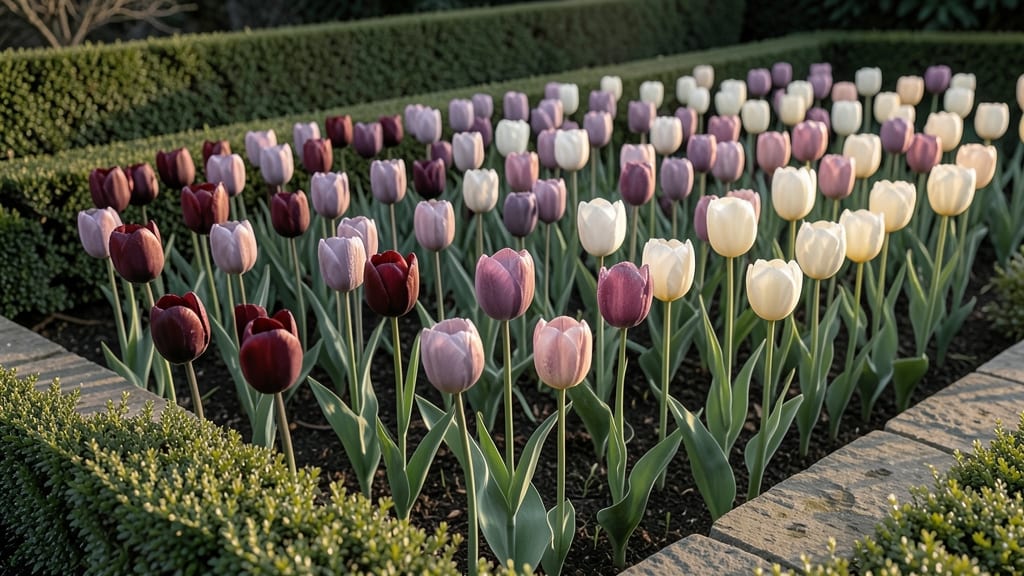
Want to create a garden that feels like a living painting without overwhelming your space? Monochromatic tulip shadows use subtle color variations to create depth and elegance—ideal for formal gardens where sophistication matters more than bold contrasts.
Start by selecting three to five tulip varieties within the same color family, like soft pinks ranging from blush to magenta or purples from lavender to deep violet. Plant the lightest shade at the front of the bed, gradually transitioning to darker tones toward the back. This creates a shadow effect that draws the eye deeper into the garden while keeping the look cohesive. Use white gravel or boxwood edging to define the bed and enhance the monochromatic theme.
This design is perfect for gardeners who love clean lines and understated beauty—think traditional landscapes, cottage gardens with a modern twist, or even urban courtyards. The subtle color shifts make it feel timeless and refined, while still delivering that springtime wow factor. 🌷
Checkerboard Tulip Layout

Turn heads in tight spaces with a checkerboard tulip layout—where bold geometry meets vibrant color. This striking design uses alternating squares of two complementary tulip varieties, like deep red and crisp white, to create a high-contrast visual that demands attention without requiring extra square footage.
Start by sketching your bed layout, using a grid to map out equal-sized squares (typically 12"–18" per side). Plant bulbs in a staggered pattern for natural density, ensuring each square contains the same number of bulbs for uniform blooming. For extra drama, frame the bed with black edging material or low-growing boxwood hedges to sharpen the lines. Pair with early-blooming daffodils at the edges to extend the season.
This design thrives in small urban gardens, container arrangements, or as a focal point along walkways. The crisp contrast makes it ideal for photographers or anyone who loves a garden that looks like a living work of art. ✨
Wave Pattern Tulip Beds

Tired of rigid geometric tulip beds that clash with your garden's natural flow? Wave pattern tulip beds bring the soothing rhythm of ocean waves to your landscape, creating organic movement that blends seamlessly with wildflower borders or meadow-style gardens.
Start by selecting three tulip varieties in complementary colors—think soft lavender, buttery yellow, and peachy pink—then plant them in gentle, overlapping curves rather than straight lines. Space bulbs 4-6 inches apart in undulating rows, with taller varieties at the "wave crests" and shorter ones in the "valleys." For extra natural charm, surround the bed with native grasses or wildflowers to soften the edges.
This design works beautifully in naturalistic gardens where structured patterns feel out of place, and it's especially forgiving for gardeners who prefer organic shapes over precision. The flowing lines create a calming visual rhythm that invites exploration. 🌿
Concentric Circle Tulips
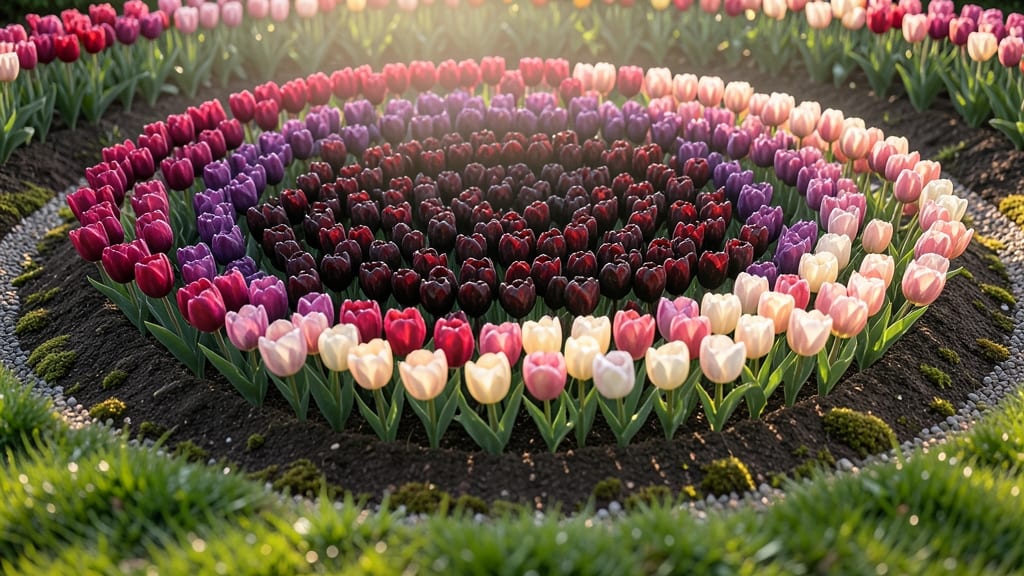
Want a tulip display that feels like a living work of art? Concentric circle tulips create a mesmerizing focal point that draws the eye toward the center, perfect for round garden beds or as a stunning centerpiece in your yard.
Start by planting the darkest-colored tulips in the center circle, then work outward with progressively lighter shades—think deep red transitioning to fiery orange, then golden yellow. Use a garden hose or string to mark precise circles before planting for perfect symmetry. For a 3-foot diameter bed, space bulbs 4-6 inches apart, with each concentric ring about 12 inches wider than the last. This design thrives in full sun and well-drained soil, making it ideal for both novice and experienced gardeners.
This timeless pattern works beautifully in formal gardens or as a whimsical centerpiece for outdoor gatherings. The radiating colors create a natural focal point that feels both structured and organic. 🌟
Striped Border Tulip Garden
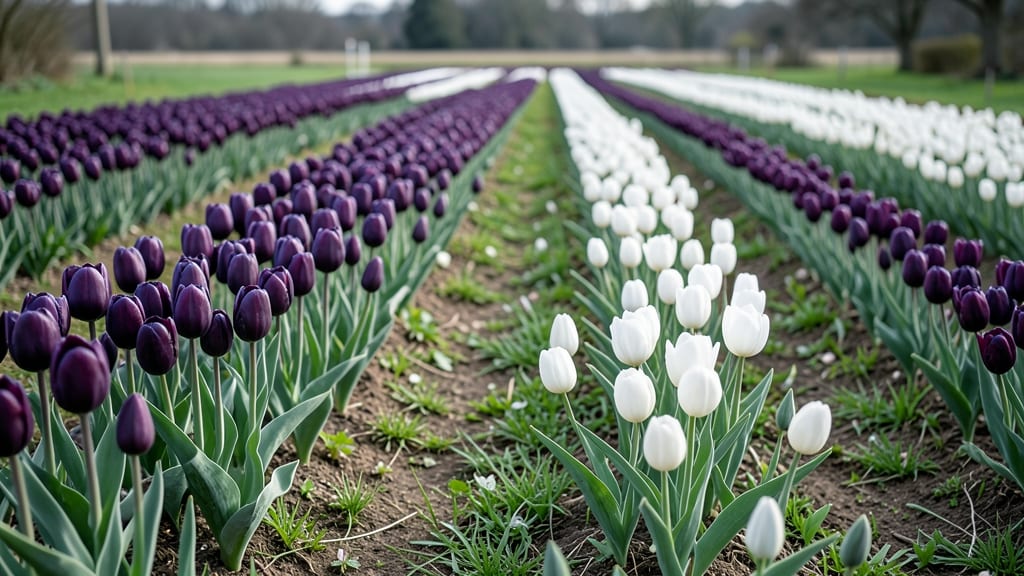
Tired of plain borders that blend into your landscape? A striped border tulip garden transforms ordinary edges into eye-catching frames that define your beds with precision. This design uses narrow stripes of contrasting tulip varieties—like deep purple 'Queen of Night' paired with crisp white 'Ice Follies'—to create a striking visual rhythm along pathways or garden borders.
Plant bulbs in 2-inch-wide stripes, spacing them 4-6 inches apart for a clean, uniform look. Use a wooden border edger or string line to keep rows straight, and mulch with gravel to maintain crisp lines. For formal gardens, repeat the stripe pattern every 12-18 inches, while cottage-style gardens can space stripes wider for a looser feel. This technique works especially well with parterre-style beds or along straight pathways.
Perfect for gardeners who love structure but crave color, this method adds year-round interest—even after tulips fade, the defined edges remain elegant. It’s ideal for urban gardens with limited space or formal landscapes where clean lines are key. 🌷
Ombré Tulip Transition

Want to create a dramatic, eye-catching tulip display that feels like a living work of art? An ombré tulip transition transforms your garden into a seamless gradient of colors, blending hues like deep burgundy fading into soft pink or royal purple into lavender. This technique works especially well in long, narrow beds or along property borders, where the gradual shift draws the eye and adds depth to your landscape.
To achieve this effect, start by selecting 3-4 tulip varieties with similar bloom times but varying shades. For example, pair Queen of Night (deep purple) with Pink Diamond (soft pink) and Apeldoorn (white) for a cool-toned gradient. Plant bulbs in rows or staggered clusters, gradually shifting from darkest to lightest as you move across the bed. Space bulbs 4-6 inches apart for a dense, lush look, and consider adding low-growing perennials like creeping thyme between rows to soften transitions.
This design is perfect for gardeners who love bold visual statements without the complexity of intricate patterns. It’s especially effective in large garden spaces or along driveways, where the gradual color shift creates a stunning backdrop. Plus, the low-maintenance nature of tulips means you’ll enjoy this showstopper with minimal effort. ✨
Mosaic Tulip Patterns

Turn your tulip bed into a stained glass masterpiece with mosaic patterns that catch the light and spark conversation. This artistic approach uses small sections of contrasting colors—like deep burgundy, sunny yellow, and crisp white—to create geometric shapes that resemble intricate window designs.
Start by sketching your design on paper first, then use bulb spacing guides (4-6 inches apart) to maintain sharp lines between colors. Choose early, mid, and late-blooming varieties to ensure continuous visual interest throughout spring. For extra definition, border your mosaic with black gravel or edging stones to make the patterns pop against the background.
Artistic gardeners and those with a passion for bold visual statements will love this approach, as it transforms simple bulbs into a living work of art. The key is patience—wait until the foliage emerges to assess spacing before blooms fill in the gaps. ✨
Seasonal Tulip Rotation Beds

Tired of tulips blooming all at once and fading too quickly? Seasonal rotation beds extend your spring color show by layering early, mid, and late-blooming varieties in separate sections. This simple strategy turns one planting session into months of effortless beauty—ideal for gardeners who love tulips but hate constant upkeep.
Start by dividing your bed into three zones: plant early bloomers like 'White Dream' in one corner, mid-season favorites such as 'Queen of Night' in the center, and late bloomers like 'Darwin Hybrid' tulips along the back. Each group blooms 2-3 weeks apart, creating a cascading effect that keeps your garden vibrant from March through May. Use landmark plants or stepping stones to visually separate sections while keeping the design cohesive.
This approach works perfectly for busy gardeners or anyone with limited time—once planted, these beds require no extra work beyond basic tulip care. The result? A low-maintenance garden that feels like it's always in season. 💚