
Tools
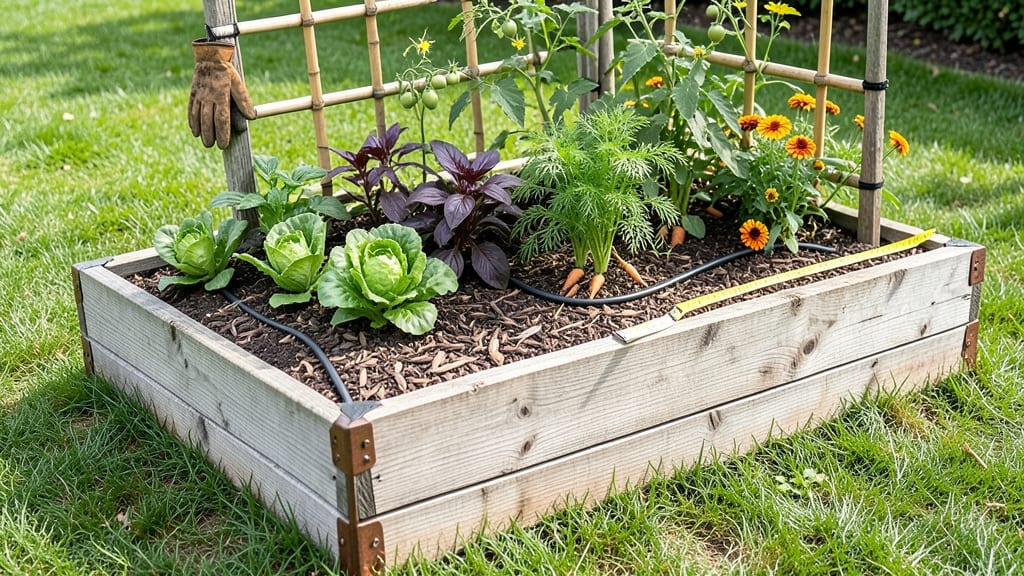
Typical raised garden bed sizes range from 4 feet long by 2-4 feet wide and 6-12 inches deep, maximizing space efficiency while allowing easy reach for planting and maintenance. Standard widths of 3-4 feet fit most adults' arm spans for comfortable gardening.
When planning your raised garden bed, these dimensions aren't just arbitrary—they're designed to balance practicality with plant health. 🌱 A 6-12 inch depth ensures proper root development while preventing soil compaction, while the 3-4 foot width lets you reach the center without stepping inside.
Many gardeners choose 4x8 foot beds because they fit standard lumber sizes perfectly, making construction simpler and more affordable.
For those with limited space, you can still create productive gardens by using narrower beds (like 2-3 feet wide) arranged in rows or even vertical designs.
The key is maintaining that 6-inch minimum depth—shallower beds may work for shallow-rooted plants but won't support deeper vegetables like tomatoes or carrots effectively.
💡 In This Article
- Optimal Raised Garden Bed Dimensions for Plant Growth
- Customizing Raised Garden Bed Sizes for Small Spaces
Optimal raised garden bed dimensions for plant growth
The 6-12 inch depth of standard raised beds is no accident—it directly impacts root development and soil health. Deeper beds (10-12 inches) accommodate vegetables like tomatoes, potatoes, and carrots, whose roots need space to grow downward.
Shallower beds (6-8 inches) work well for herbs, lettuce, and strawberries, which have shallower root systems. The extra depth also improves drainage, preventing waterlogging that can suffocate roots and invite fungal diseases. 🌱
Width matters just as much as depth, with 3-4 feet being the sweet spot for accessibility. This dimension lets you reach the center of the bed without stepping inside, reducing soil compaction from foot traffic.
Wider beds (4+ feet) force you to step in, which can damage plants and compact the soil. Narrower beds (2-3 feet) work for single-file planting but may require more frequent watering since edges dry out faster.
The 4x8 foot standard also aligns with common lumber sizes, making construction cost-effective and straightforward.
Soil temperature plays a hidden role in these dimensions. Deeper beds warm up more slowly in spring but retain heat better in fall, extending the growing season. The raised structure also keeps soil warmer than ground-level plots, which is why many gardeners plant earlier in raised beds.
This thermal advantage is particularly valuable in cooler climates where the growing season is short. The 12-inch depth becomes especially beneficial for overwintering crops like kale or spinach that need consistent warmth.
Plant spacing is another key factor influenced by bed dimensions. A 4x8 foot bed allows for optimal spacing between plants—typically 12-18 inches apart for most vegetables—while maximizing yield in a compact area.
The rectangular shape also makes it easier to rotate crops annually, a practice that prevents soil depletion and reduces pest cycles. Smaller beds (like 3x6 feet) work well for intensive planting of fast-growing crops such as radishes or lettuce, where you might interplant multiple harvests in the same space.
Weed control is subtly improved by these dimensions. The 3-4 foot width creates a manageable surface area for hand-weeding, while the raised edges naturally suppress weeds from creeping in from the sides. The contained soil also warms up faster in spring, giving plants a head start over weeds.
For comparison, ground-level gardens often struggle with weed pressure because the soil stays cooler and moisture levels are less predictable. 🌿
One often-overlooked benefit of standard dimensions is tool compatibility. Most gardening tools (like hoes, trowels, and watering wands) are designed to work efficiently in 3-4 foot wide beds. You can easily reach across the width without stretching, and tools glide smoothly over the soil surface.
This ergonomic design reduces strain on your back and knees, making gardening more sustainable over time. For example, a 4x8 foot bed fits perfectly under a standard 8-foot garden hose reel, making watering more efficient.
For those working with limited space, remember that you can always create multiple smaller beds rather than one large one. The key is maintaining the 6-inch minimum depth and keeping widths manageable for your reach.
Even a 2x4 foot bed can be highly productive if focused on high-value crops like microgreens or herbs. The standard dimensions exist to balance productivity, accessibility, and plant health—but they're not set in stone. 💡