
Plants
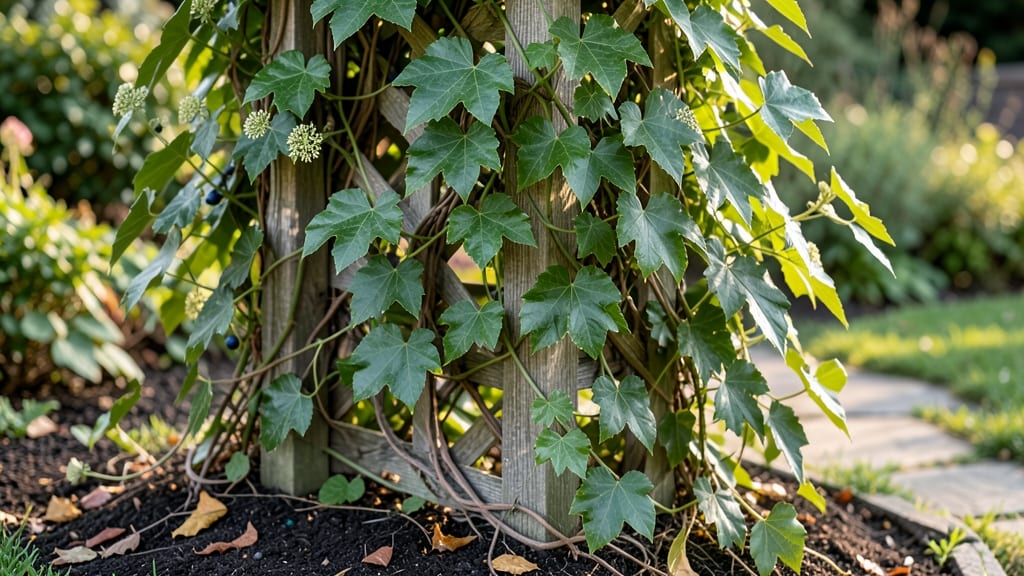
A vine featuring three-lobed leaves is almost certainly poison ivy (Toxicodendron radicans), though Virginia creeper (Parthenocissus quinquefolia) and Boston ivy (Parthenocissus tricuspidata) share similar leaf shapes. Poison ivy’s leaves are glossy with smooth edges, while Virginia creeper has five leaflets and Boston ivy grows in clusters of three sharp-pointed lobes.
Identifying these vines correctly is crucial because poison ivy contains urushiol, an oil that causes severe skin reactions in most people. 🌿 The classic "leaves of three" rule applies to poison ivy, but Virginia creeper and Boston ivy can mimic its appearance.
Virginia creeper's five leaflets and Boston ivy's pointed lobes provide key visual differences. Always double-check growth patterns—poison ivy often forms patches along fences or forest edges, while Boston ivy climbs walls in dense clusters.
For gardeners, avoiding poison ivy means choosing safer alternatives like clematis or hops, which offer similar climbing habits without the allergic risks. If you encounter poison ivy, wear gloves and use vinegar or commercial herbicides for removal.
Never burn the plant, as smoke can spread urushiol and cause respiratory irritation.
💡 In This Article
- Identifying Poison Ivy vs. Non-Toxic Lookalikes
- Safe Handling and Garden Alternatives to Poison Ivy
Identifying poison ivy vs. non-toxic lookalikes
The key to distinguishing poison ivy from its lookalikes lies in the leaf structure and arrangement. Poison ivy's leaves grow in groups of three with smooth, glossy edges and a central stem that connects each leaflet.
The leaflets themselves are typically 2-5 inches long, with a slightly pointed tip and a waxy sheen that reflects light. This glossy surface is a dead giveaway—Virginia creeper and Boston ivy lack this characteristic shine, instead having a matte or slightly rough texture.
Virginia creeper stands out immediately with its five leaflets per stem, arranged like a hand with fingers. Each leaflet is 1-3 inches long and has a serrated edge, unlike poison ivy's smooth lobes.
Boston ivy, on the other hand, grows in clusters of three pointed lobes that resemble a maple leaf, but its edges are jagged and uneven.
The lobes also tend to be 1-4 inches long and grow in dense, overlapping clusters that cling tightly to walls or fences. 🌿 Another clue is the growth habit: poison ivy spreads along the ground or climbs by attaching to surfaces with root-like structures called aerial roots, while Boston ivy climbs walls in dense, vine-like sheets.
Color and season also provide critical clues. Poison ivy leaves turn a vibrant red or orange in fall, while Virginia creeper's leaves turn yellow or red. Boston ivy, however, displays stunning red or purple foliage in autumn, a trait that makes it popular for ornamental use.
If you're unsure, check the leaf edges: poison ivy's lobes are smooth, while Boston ivy's are sharply toothed, almost like a miniature maple leaf. These differences can help you avoid accidental contact with urushiol, the oil responsible for poison ivy's allergic reactions.
For a hands-off identification, observe the vine's behavior. Poison ivy often forms patches along forest edges or fences, while Boston ivy climbs vertically on buildings or trees. Virginia creeper tends to grow more horizontally, covering large areas with its five-leaflet clusters.
If you're still unsure, snap a photo and compare it to trusted botanical resources—never touch the plant without protection, as even dead poison ivy can cause reactions.
One common mistake is confusing poison ivy with toxic sumac, which has seven to thirteen leaflets. However, toxic sumac grows in wet areas and has a more tropical appearance.
The "leaves of three" rule applies to poison ivy, poison oak, and poison sumac, but only poison ivy is commonly found as a vine in temperate climates. Always remember: if it's a vine with three leaflets, assume it's poison ivy until proven otherwise.
Here's a quick visual checklist to keep in mind:
- Poison Ivy: Three smooth, glossy leaflets (2-5 inches), grows along fences or ground
- Virginia Creeper: Five leaflets (1-3 inches), serrated edges, grows horizontally
- Boston Ivy: Three pointed lobes (1-4 inches), jagged edges, climbs walls in dense clusters
When in doubt, err on the side of caution—poison ivy's urushiol oil can linger on tools, clothing, or even pets for months, so always wear gloves and wash thoroughly after handling any unknown vines. 🚨