
Tools
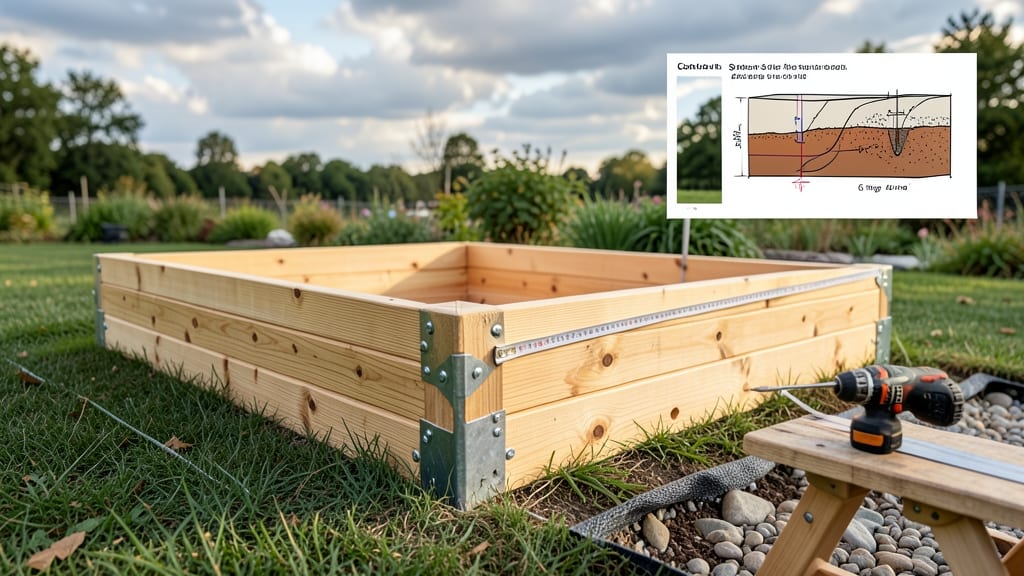
A 2x8 raised garden bed plans transforms your garden into a powerhouse for root crops, shrubs, and hungry plants like tomatoes. 🌱 I built mine last spring after struggling with shallow soil that stunted my potatoes and carrots—now my plants grow twice as big with half the effort.
The secret lies in 2x8-foot dimensions: wide enough for easy access, deep enough for serious growth, and just the right size to fill a small corner without dominating the yard. Cedar or redwood lasts years without rotting, and the 12-inch height saves your back while keeping weeds at bay.
By the time you finish, you’ll have a productive, low-maintenance space that outperforms in-ground beds. The deep soil warms faster in spring, holds moisture longer, and lets you grow everything from asparagus to dwarf fruit trees. Perfect for beginners or space-challenged gardeners—here’s how to build one that lasts for seasons.
📚 In This Guide
- What you need
- Instructions
- Tips and common mistakes
- Wrapping up and next steps
What you need
- ● Lumber: 4 pieces of 2x8 pressure-treated lumber (or cedar/redwood for longevity) – 8 feet long each
- ○ 4 corner posts: 2x2 lumber – 2 feet tall each (optional but recommended for extra height)
- ● Hardware: 16 3-inch exterior wood screws (or deck screws) for frame assembly
- ● 8 2.5-inch decking screws (if using corner posts)
- ● Landscape Fabric: 10 ft x 10 ft (to block weeds and retain moisture)
- ● Soil Mix: Topsoil – ~1 cubic yard (for filling the bed)
- ● Compost – ~1 cubic yard (for nutrient-rich planting)
- ○ Perlite or vermiculite (optional, for drainage)
- ● Measuring tape
- ● Circular saw or miter saw (for cutting lumber)
- ● Drill/driver (with screwdriver bits)
- ● Level (to ensure the bed is even)
- ● Staple gun (for securing landscape fabric)
- ● Wheelbarrow or shovel (for moving soil)
- ● Work gloves & safety goggles (because safety first!)
- ● Wood stain or sealant (to protect lumber from weather)
- ● Drip irrigation kit (for easy watering)
- ● Garden bed liner (to extend bed life)
- ● Gravel or pavers (for a base if building on grass)
Step-by-step instructions for building a 2x8 raised garden bed
Here’s how to build a sturdy, deep bed that will feed your heavy-rooted plants for years.
🪴 Step 1: Gather Materials and Tools
For a 2-foot-deep, 2x8-foot bed, you’ll need 4 untreated cedar or redwood boards (2x6s or 2x8s, 8 feet long)—cedar resists rot naturally, which is key for longevity. Grab 2.5 gallons exterior wood screws (2.5–3 inches long) and 4 corner brackets for reinforcement. Don’t forget landscape fabric (3x10 feet) to block weeds and cardboard (for a weed-free base).
I always double-check my lumber dimensions before cutting—2x6 boards are standard, but 2x8s work if you want extra width for future expansion. Pre-drill screw holes to prevent splitting, especially at the corners where stress builds. Grab a circular saw, drill, level, and staple gun—these tools make the job smoother.
☀️ Step 2: Choose the Perfect Location and Prepare the Site
Pick a sunny spot with at least 6 hours of direct light daily—most vegetables and root crops need this for strong growth. Clear the area of grass, rocks, and debris, then mark the bed’s outline with stakes and string for precision. The bed should sit on flat, level ground—uneven spots will cause drainage issues or instability.
I like to add a 2-inch layer of gravel under the bed for drainage, especially in clay-heavy soil. This prevents waterlogging, which can rot roots. If your yard slopes, build a slight 1-inch crown (higher in the center) to help water run off instead of pooling.
🌱 Step 3: Assemble the Frame for Stability
Lay two 8-foot boards parallel to each other, 2 feet apart, and secure them at both ends with corner brackets and screws. Use a level to ensure they’re perfectly straight—this is your foundation. Repeat with the other two boards, creating a rectangular frame. The 2-foot depth is ideal for potatoes, carrots, and other deep-rooted plants.
Here’s the thing—don’t skimp on screws. Drive them at a 45-degree angle into the corners for maximum strength. I also add extra screws every 18 inches along the seams to prevent wobbling. Once the frame is square and sturdy, flip it over and line the base with cardboard, overlapping edges to block weeds completely.
💧 Step 4: Fill With the Right Soil Mix for Deep Roots
Start with a 3-inch layer of compost (well-aged, not fresh) to feed the soil as it breaks down. Then add 12 cubic feet of high-quality garden soil—I mix 50% topsoil, 30% compost, and 20% perlite or sand for drainage. Fill the bed 2/3 full, then water it deeply to settle the layers.
Don’t just dump soil in—layer it in 4-inch increments, tamping lightly with your hands to eliminate air pockets. This ensures roots grow straight and strong. For heavy feeders like tomatoes or squash, add a 5-10-10 fertilizer (1 cup per bed) mixed into the top 6 inches of soil before planting.
✂️ Step 5: Plant and Maintain for Long-Term Success
Space plants according to their mature size—carrots and radishes can crowd, but tomatoes and peppers need 18–24 inches apart. Water deeply after planting, then 1–2 inches per week (more in hot climates). Mulch with 2 inches of straw or wood chips to retain moisture and suppress weeds.
Check soil moisture daily in summer—deep beds dry out faster than ground-level plots. If the top 2 inches feel dry, it’s time to water. Rotate crops yearly to prevent soil depletion, and add 2–3 inches of compost every spring. With this depth, you’ll grow bigger, healthier roots than in shallow beds.
Tips & tricks for building a sturdy 2x8 raised garden bed
Common pitfalls—and how to sidestep every one—when constructing your deep-rooted planting powerhouse.
Material Selection: Cedar and redwood are my top picks for their natural rot resistance, but if you're on a budget, pressure-treated lumber works too—just avoid CCB-treated wood, which can contaminate your soil. For the 2-foot depth, stick with 2x6 boards (actual dimensions are 5.5" x 1.5") to ensure proper spacing for deep-rooted plants like potatoes and carrots. I've learned this the hard way after using thinner boards that warped over time.
Foundation Stability: That 2-inch gravel layer under the bed is non-negotiable for drainage, especially in clay-heavy soils. I like to use crushed stone or pea gravel—both work well. For extra stability, consider adding rebar stakes at each corner before assembling the frame. This prevents shifting over time, which is crucial for the 2-foot depth that makes this bed special for heavy roots.
Soil Layering Technique: When filling your bed, don't just dump all 12 cubic feet of soil at once. The 4-inch increments mentioned in Step 4 are key—they prevent compaction and create ideal root pathways. After each layer, water it down and let it settle before adding the next. For the top 6 inches, mix in that 1 cup of 5-10-10 fertilizer—this is where your plants will focus their root growth, so give them a nutrient boost right where they'll need it most.
Long-Term Maintenance: The 2-inch mulch layer you'll add after planting isn't just for looks—it's a game-changer for moisture retention and weed suppression. I use straw because it breaks down slowly, but wood chips work too. Replenish this every few months, especially in summer when you'll need to check that top 2 inches of soil daily for dryness. This deep bed will dry out faster than traditional plots, so don't neglect the watering!
Pro Tips for 2x8 Raised Garden Bed Plans
- Common pitfalls—and how to sidestep every one—when constructing your deep-rooted planting powerhouse.
- Material Selection: Cedar and redwood are my top picks for their natural rot resistance, but if you're on a budget, p...
- Foundation Stability: That 2-inch gravel layer under the bed is non-negotiable for drainage, especially in clay-heavy...
Frequently asked questions
Got questions about your 2x8 raised garden bed?
Here’s what you need to know before digging in!
What’s the best depth for a 2x8 raised bed to support deep-rooted plants like asparagus or tomatoes?
A 2-foot depth is ideal for most vegetables, but for heavy-rooted crops like asparagus or potatoes, aim for 24–30 inches. Use untreated lumber or cedar for longevity, and layer with compost-rich soil to prevent compaction. Pro tip: Add a layer of hardware cloth at the bottom to deter burrowing pests!
When is the best time to build a 2x8 raised bed—spring or fall?
Build in early spring or late fall when soil is workable but not frozen. Fall prep gives roots time to establish before winter, while spring lets you plant immediately. Avoid building during wet seasons to prevent wood warping or soil erosion. Bonus: Prep the bed site in advance by clearing weeds and leveling the ground!
Can I reuse old wood (like pallets or fencing) for a 2x8 raised bed?
Use caution! Pressure-treated wood (especially pre-2004) may contain harmful chemicals. Opt for untreated lumber, cedar, or redwood instead—they resist rot naturally. If reusing pallets, check for stamps like HT (heat-treated) or MB (methyl bromide-free). Line the bed with landscape fabric to extend its life.
How do I keep squirrels, rabbits, or other pests out of my raised bed?
Combine physical barriers + deterrents:
- Hardware cloth (1/4-inch mesh) buried 12 inches deep around the bed.
- Chicken wire draped over the top for above-ground critters.
- Hot pepper spray or predator urine (like fox urine) as a natural repellent.
- Plant pest-repelling companions like marigolds or garlic near the edges.
For rabbits, add a 2-foot-tall fence around the bed—they’re expert jumpers!
Do I need to water a 2x8 raised bed differently than an in-ground garden?
Yes! Raised beds dry out faster due to less soil mass. Water deeply 2–3 times per week (early morning is best) and mulch with straw or wood chips to retain moisture. Use a soaker hose to avoid wetting leaves, which can cause disease. Pro tip: Test soil moisture with your finger—if the top 1–2 inches are dry, it’s time to water!
Wrapping up and next steps
Building a 2x8 raised garden bed is a game-changer for growing deep-rooted plants like tomatoes, corn, or fruit trees—and you’ve got all the tools to make it happen! 🌱 Whether you’re a seasoned gardener or just starting, this plan gives you the perfect balance of space, depth, and customization.
Now that you’re armed with materials, FAQs, and step-by-step guidance, it’s time to roll up your sleeves and get planting!
Your next step? Sketch your layout, gather your supplies, and start building. Before you know it, you’ll be harvesting homegrown goodness straight from your 2-foot-deep powerhouse bed. Happy gardening! 🌿