
Light Requirements
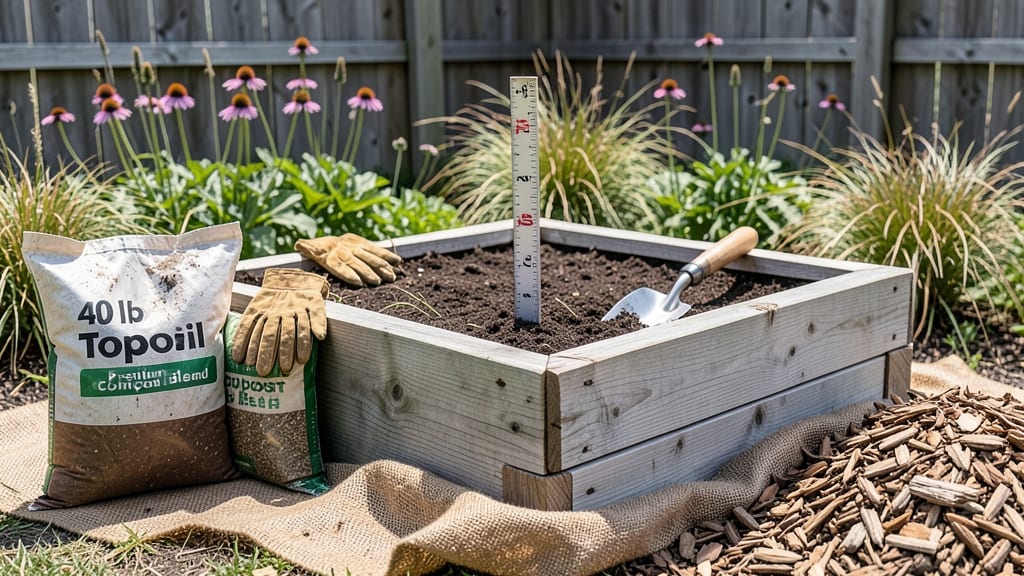
To fill an 8x4x2 raised garden bed, you'll need 64 cubic feet of soil (8 ft × 4 ft × 2 ft depth). For cost savings, use a mix of topsoil, compost, and organic matter, and consider purchasing soil in bulk to reduce expenses while maintaining fertility and drainage.
Calculating this volume is straightforward—just multiply the bed's length, width, and height (8 × 4 × 2 = 64). 🌱 A 2-foot depth is ideal because it accommodates most root systems while preventing soil compaction.
For a budget-friendly approach, I recommend blending 60% topsoil with 30% compost and 10% perlite—this improves drainage and nutrient retention without breaking the bank. Buying soil in bulk often cuts costs by 30-50% compared to pre-bagged options, and you can even source compost locally to save even more.
What's interesting is how this volume translates to real-world purchasing. A single cubic yard (27 cubic feet) of soil would cover less than half your bed, so plan for 2.4 cubic yards total.
If you're DIY-minded, consider building your own compost pile—it's a sustainable way to reduce long-term soil costs while improving your garden's health over time.
💡 In This Article
- Calculating Soil Volume for Raised Garden Beds
- Budget-Friendly Soil Mixes for Raised Beds
Calculating soil volume for raised garden beds
The math behind soil volume is simpler than you might think—it's all about multiplying the three dimensions of your raised bed. For an 8x4x2 bed, that's 8 feet (length) × 4 feet (width) × 2 feet (depth), which equals 64 cubic feet of soil.
This calculation works because cubic feet measure three-dimensional space, just like how cubic inches measure smaller spaces like a sugar cube. 🔥 The key here is understanding that depth matters just as much as length and width, which is why a 2-foot depth is often recommended.
Why 2 feet? This depth provides enough room for most root systems to develop fully without becoming too compacted. For example, tomatoes need about 18-24 inches of depth, while carrots require 12-16 inches. The extra 6 inches gives roots room to spread and access nutrients more efficiently.
Additionally, a deeper bed improves drainage, which is critical for preventing waterlogging—a common issue in shallower beds that can suffocate plant roots. Think of it like giving your plants a cozy, well-ventilated basement where they can thrive.
Here's where things get practical: if you're working with a 2-foot depth, you'll need to account for the space taken up by the bed's frame.
Most raised beds have walls that are 4-6 inches thick, which means the actual soil depth inside might be closer to 18-16 inches. This slight reduction is worth noting when planning your soil volume, as it can affect how much you need to purchase.
For instance, if your bed's internal depth is 1.5 feet instead of 2, you'd need 48 cubic feet instead of 64.
Another factor to consider is soil settling. Fresh soil can compact over time, especially when watered or worked. To account for this, many gardeners add an extra 10-20% to their soil volume calculations.
For our 8x4x2 bed, that means purchasing closer to 70-77 cubic feet to ensure you have enough soil after settling. This extra cushion also helps if you decide to add more compost or organic matter later, which can improve soil structure over time.
Let's break down how this translates into real-world measurements. A standard cubic yard of soil contains 27 cubic feet, so for a 64 cubic foot bed, you'd need about 2.4 cubic yards of soil.
If you're buying in bags, a typical 2 cubic foot bag would require 32 bags—but buying in bulk or larger quantities (like 4 cubic foot bags) can significantly cut down on both cost and effort.
Understanding these conversions helps you plan your shopping trip efficiently and avoid running out mid-project.
One common mistake is underestimating the volume because of the bed's height. Visualizing a 2-foot depth can be tricky—it's taller than many people realize! To put it in perspective, a 2-foot deep bed is roughly the height of a standard kitchen counter.
This height is ideal for most vegetables but may require a bit more effort to fill, especially if you're carrying heavy bags of soil. Using a wheelbarrow or asking for help can make this task much more manageable. 💫