
Planting
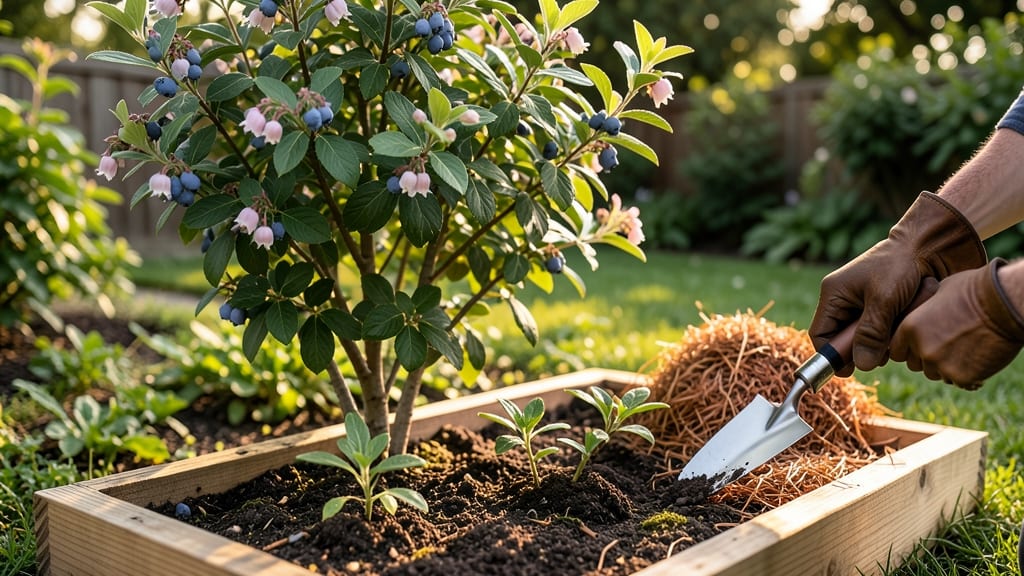
Blueberry raised bed spacing requires 3 to 5 feet between bushes for dwarf varieties and 6 to 8 feet for standard-sized plants to ensure proper airflow, sunlight exposure, and root development for optimal fruit production. Adjust spacing based on mature bush size and variety type.
Proper spacing is the foundation of a thriving blueberry patch. 🌱 Without enough room, bushes compete for nutrients, leading to smaller berries and weaker plants. I’ve seen firsthand how 3-to-5-foot spacing for dwarf varieties prevents overcrowding while still allowing sunlight to reach all leaves.
For larger bushes, the extra 2 feet makes a huge difference in disease prevention—moisture lingers less between plants. Think of it like giving each bush its own personal bubble for growth!
Here’s the kicker: some varieties like 'Top Hat' stay compact, while others like 'Duke' spread wider. Always check the plant tag for mature size—it’s the best predictor of how much space you’ll need.
And if you’re working with limited space? Try staggered rows instead of grids to maximize yield without sacrificing airflow.
💡 In This Article
- How Blueberry Bush Size Affects Raised Bed Spacing Needs
- Optimal Blueberry Raised Bed Layouts by Variety
How blueberry bush size affects raised bed spacing needs
Blueberry bushes grow in two distinct growth patterns that directly impact spacing needs. Dwarf varieties like 'Top Hat' or 'Peach Sorbet' develop a compact root system (typically 2-3 feet wide) and a 3-4 foot canopy, making them ideal for tight spaces.
Their smaller stature means less competition for water and nutrients, but they still need room to breathe—roots spread wider than the above-ground foliage. Standard bushes like 'Duke' or 'Bluecrop', however, can reach 5-6 feet wide with a similar canopy height, requiring more elbow room to prevent root entanglement.
The science behind this spacing comes down to three key factors: root competition, sunlight interception, and disease prevention. Blueberry roots extend outward in a shallow, wide pattern (often 2-3 times wider than the plant's height) to access nutrients in the topsoil.
When bushes are too close, roots tangle and compete for moisture and minerals, leading to stunted growth and reduced fruit production. 🌱 Sunlight is another critical factor—blueberries need full sun exposure (at least 6-8 hours daily) for photosynthesis, and overcrowding creates shaded areas where berries won't ripen properly.
Finally, poor airflow between plants traps humidity, creating ideal conditions for fungal diseases like botrytis (which causes gray mold on ripe berries).
Consider the mature size listed on plant tags as your spacing guide. For example, a 'Jersey' blueberry (a semi-dwarf variety) might only need 4 feet of space, while a 'Patriot' (a standard variety) could require 6-7 feet.
The rule of thumb is to space bushes 1-2 feet wider than their mature width to account for natural spreading. In raised beds, this means planning your layout before planting—once established, moving mature bushes is nearly impossible without damaging roots.
Think of it like designing a cozy neighborhood where each plant has enough room to thrive without encroaching on its neighbors.
Another often-overlooked factor is the blueberry's growth habit over time. Young bushes grow slowly, but their root systems expand rapidly in the first 2-3 years. Planting too close initially might seem efficient, but it leads to pruning headaches later.
For instance, a 'Duke' blueberry might start small but develop a 5-foot spread within 5 years, leaving no room for expansion. This is why professional growers recommend 10-12 feet between rows of standard varieties—it allows for future growth while maintaining accessibility for harvesting and maintenance. 🌿
For raised beds specifically, the depth of the soil (typically 12-18 inches) also influences spacing. Deeper beds allow roots to spread more horizontally, which can slightly reduce the required spacing between plants. However, this doesn't negate the need for proper horizontal distance—roots still need to avoid overlapping.
A good practice is to mound the soil slightly when planting to encourage roots to grow outward rather than downward, which further justifies the need for adequate spacing from the start.
One practical tip: if you're working with limited space, consider planting blueberries in a staggered pattern rather than a grid. This creates natural gaps for airflow while maximizing the number of plants per square foot.
For example, in a 4x8-foot raised bed, you could fit 4 dwarf bushes in a diamond formation with 3-foot spacing, leaving the center open for easier maintenance.
This approach mimics how blueberries grow in the wild—spread out enough to avoid competition but close enough to form a productive patch.