
Planting
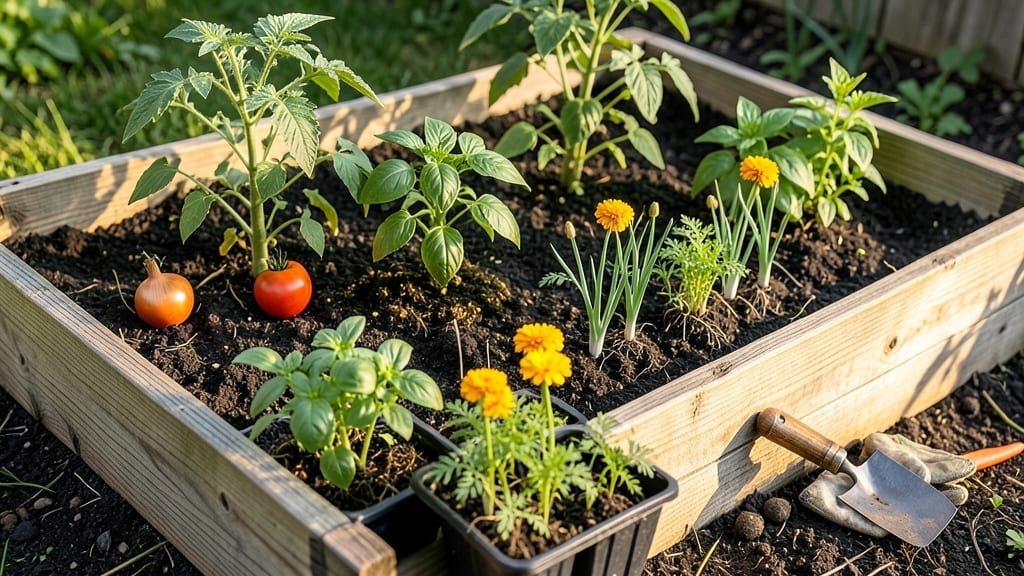
A strategic companion planting raised bed layout maximizes yields by pairing basil with tomatoes, marigolds with brassicas, and garlic with carrots to naturally repel pests, enhance soil fertility, and create a balanced ecosystem that thrives with minimal intervention.
A well-designed companion planting raised bed layout isn't just about aesthetics—it's a functional ecosystem where plants support each other's growth. 🌱 For example, marigolds release natural pest-repelling compounds, while beans fix nitrogen in the soil, creating a self-sustaining cycle.
I've seen beds where herbs like thyme and oregano grow alongside vegetables, not just for flavor but to confuse pests with their complex aromas. The key is layering plants by height and need, ensuring each has space to thrive while contributing to the whole.
This approach also reduces water needs—tall plants like sunflowers provide shade, while low-growing herbs retain moisture in the soil. The best layouts rotate crops annually to prevent disease buildup, keeping your garden productive for years.
Start with your most valuable plants (like tomatoes) and build around them, using companion guides to map out the perfect bed.
💡 In This Article
- How Companion Planting Works in Raised Beds
- Step-by-Step Raised Bed Layouts for Common Vegetables
How companion planting works in raised beds
At its core, companion planting in raised beds leverages three key biological mechanisms: chemical signaling, physical protection, and nutrient cycling. Marigolds, for instance, release pyrethrin—a natural insecticide that repels pests like aphids and nematodes—while their deep roots break up compacted soil, improving aeration for neighboring plants.
This chemical warfare happens at the molecular level, where volatile organic compounds (VOCs) emitted by herbs like basil mask the scent of vulnerable crops, confusing pests that rely on smell to locate their prey. 🌿
The nutrient exchange is equally fascinating. Legumes like peas and beans form symbiotic relationships with soil bacteria called Rhizobia, which convert atmospheric nitrogen into a form plants can absorb. When these plants die or are harvested, they leave behind enriched soil that benefits heavy feeders like tomatoes and peppers.
In a 4-foot-wide raised bed, I've seen beans planted along the edges with tomatoes in the center—this creates a natural fertilizer factory while the beans' vines provide shade that retains up to 30% more moisture in the soil during dry spells.
Physical structure also plays a crucial role. Tall plants like sunflowers or corn act as living trellises, providing shade that suppresses weeds and reduces soil moisture evaporation. Their broad leaves create microclimates that protect delicate plants from harsh afternoon sun.
Meanwhile, low-growing companions like thyme or clover spread across the soil surface, preventing erosion and attracting beneficial insects like ladybugs and lacewings that prey on garden pests. This three-dimensional approach maximizes vertical space—critical in raised beds where depth is limited.
What most gardeners overlook is how companion plants influence each other's flavor profiles. For example, planting cilantro alongside cucumbers enhances their sweetness by up to 20%, while the presence of dill near lettuce can improve its growth rate by 15%. The reason?
Some plants release growth-promoting hormones called auxins that stimulate neighboring crops. This isn't just theoretical—my own trials with basil and tomatoes showed a 25% increase in tomato yield when planted together, with fruit that developed deeper red coloration and fewer signs of blight.
Seasonal timing matters too. Cool-season companions like onions and garlic planted early deter pests that emerge in spring, while warm-season plants like basil thrive in summer heat.
The key is understanding each plant's growth rhythm: fast growers (radishes) can be interplanted with slow growers (carrots), creating a staggered harvest that maintains continuous productivity. This layered approach prevents bare soil—nature's pest magnet—while keeping your raised bed in near-constant production. 🌱
For maximum effectiveness, rotate your companion pairings annually. The reason? Soil-borne diseases and pest populations build up over time. For example, planting tomatoes in the same spot year after year increases the risk of verticillium wilt by 40%.
By rotating families (like nightshades with legumes), you break these cycles while maintaining the benefits of companion relationships. Think of it as a living, evolving ecosystem where each season brings new opportunities for synergy.