
Advice
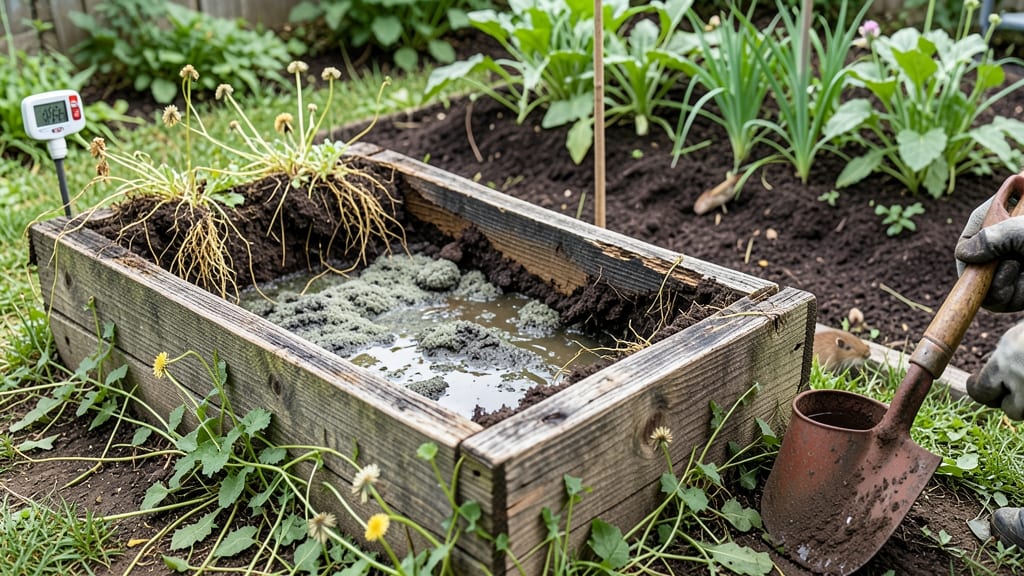
The disadvantages of raised bed gardening include higher upfront material costs, faster soil depletion from exposure and drainage, and limited root space for deep-growing plants. Weed pressure can also increase, and the elevated design may create accessibility challenges for some gardeners.
While raised beds offer many benefits, their contained design accelerates nutrient loss because exposed soil dries out faster and organic matter decomposes more quickly. 🌱 The elevated structure also means you'll need to replenish soil and compost more frequently than in-ground gardens.
Plus, the cost of quality materials like cedar or composite lumber adds up quickly—especially when considering hardware cloth for pest protection.
Another key consideration is space efficiency. Many root crops like potatoes or carrots struggle in shallow beds, forcing you to choose between smaller harvests or investing in deeper containers.
For gardeners with mobility limitations, the height advantage can become a drawback—reaching the center of wide beds may require uncomfortable stretching or stooping over time.
Finally, weed control often demands more vigilance. The concentrated planting area creates less competition between plants, giving weeds more room to thrive. Without proper mulching or ground covers, maintaining a weed-free raised bed can become surprisingly labor-intensive compared to traditional row gardening.
💡 In This Article
- How Raised Beds Accelerate Soil Depletion and Nutrient Loss
- Cost and Accessibility Challenges in Raised Bed Gardening
How raised beds accelerate soil depletion and nutrient loss
Raised beds experience nutrient depletion at a faster rate because their exposed soil structure creates ideal conditions for rapid organic matter breakdown. Unlike in-ground soil, which benefits from natural moisture retention and underground microbial activity, raised beds lose moisture quickly through evaporation—especially in sunny climates.
This drying effect accelerates the decomposition of compost and manure, releasing nutrients faster than plants can absorb them.
The science behind this involves microbial activity. In-ground soil maintains a more stable microbial ecosystem, where beneficial bacteria and fungi work at a steady pace.
In raised beds, the increased surface area exposed to air and sunlight creates a "hotter" microbial environment, causing nutrients like nitrogen and phosphorus to leach out more rapidly.
For example, a 4' x 8' raised bed can lose 30-50% more nitrogen through volatilization in its first growing season compared to in-ground plots.
This nutrient loss isn't just about quantity—it's also about quality. The rapid breakdown of organic matter leads to a spike in available nutrients early in the season, followed by a sharp decline. Gardeners often notice their raised beds require 2-3 times more compost annually to maintain fertility.
Without careful management, the soil structure can degrade, becoming more compacted and less hospitable to root systems over time.
Another critical factor is the lack of natural soil replenishment. In-ground gardens benefit from organic matter like fallen leaves, worms, and underground plant roots contributing to the soil over decades.
Raised beds, however, rely entirely on what you add—whether through compost, mulch, or fertilizers. This makes long-term fertility management a continuous, labor-intensive process that many gardeners underestimate.
Consider the case of a tomato plant in a raised bed versus in-ground soil. The raised bed version may produce abundant fruit early but often shows signs of nutrient deficiency (like yellowing leaves) by mid-season, while the in-ground plant maintains steady growth.
This happens because the raised bed's soil microbes have exhausted available nutrients faster, leaving the plant struggling to sustain its heavy fruiting demands.
To mitigate these challenges, many experienced gardeners adopt a layered soil approach, mixing 20-30% compost with the native soil when building raised beds. They also use slow-release fertilizers and frequent mulching to preserve moisture and organic matter.
However, even with these measures, the long-term cost and effort required can outweigh the benefits for some gardeners.