
Size
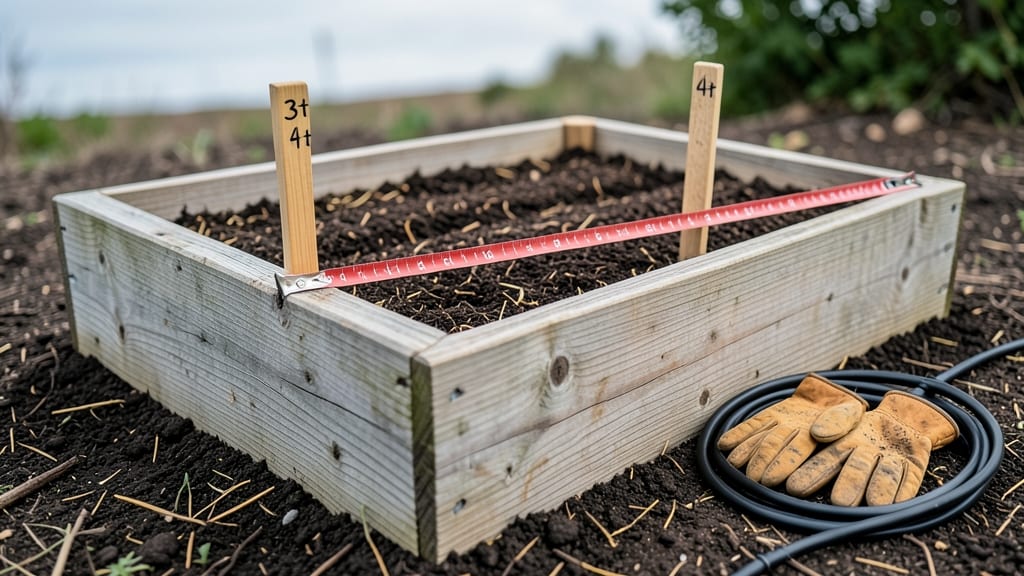
A 4-foot-wide raised bed is the golden standard—no guessing, no straining, just perfect reach for every plant. 🌱 I learned this the hard way after wrestling with a 6-foot monster that left my back aching and my middle rows neglected.
The right width makes gardening effortless, whether you're planting, weeding, or harvesting.
This magic number comes from ergonomics: you can comfortably reach the center from either side without stepping inside. It also aligns perfectly with standard lumber lengths (8-foot boards cut into 4-foot sections) and plant spacing needs. No more cramped corners where weeds take over or plants get crowded out.
What you’ll get is a productive, low-maintenance garden where every inch is accessible. Tomatoes thrive in the center, lettuce grows along the edges, and you’ll actually enjoy the time you spend there. The soil stays loose and workable, and you can rotate crops year after year without hassle.
For larger gardens, just add another 4-foot section with a narrow path between. It’s the foolproof way to design raised beds that work for your body and your plants—no matter how much (or little) space you have. Let’s make your gardening life easier!
📚 In This Guide
- What you need
- Instructions
- Tips and common mistakes
- Wrapping up and next steps
What you need
- ● Lumber or cedar boards: 2x6 or 2x8 (depending on height) – at least 8 feet long for a 4’x8’ bed. 4 pieces (2 long sides, 2 short ends). Cedar is rot-resistant!
- ● Corner brackets or screws: 4-6 galvanized screws or brackets (2.5–3” long) to secure corners.
- ○ Landscape fabric or hardware cloth: 1 roll (optional but recommended for weed control).
- ● Soil mix: High-quality garden soil or compost blend (avoid regular dirt—it compacts!).
- ● Measuring tape (for precise 4’ width!).
- ● Drill/driver + drill bits (for screws).
- ● Level (to keep your bed perfectly even).
- ● Circular saw or handsaw (for cutting lumber).
- ● Staple gun (if using landscape fabric).
- ● Wood stain or sealant (to protect lumber from weather).
- ● Gravel or pavers (for drainage at the bottom).
- ● Drip irrigation kit (for hassle-free watering!).
- ● Compost or fertilizer (to boost plant growth).
Step-by-step guide to building a raised bed with perfect width
Here's my foolproof approach to designing a raised bed that's easy to reach, maintain, and rotate crops in.
📏 Step 1: Measure and Plan Your Ideal Width
Stick to a maximum width of 4 feet—this is the magic number for easy reach from both sides. I always aim for 3-4 feet wide because it gives you enough growing space while letting you stand comfortably in the middle without stepping inside. If you're working with a partner, you can stretch to 4 feet while both of you reach from opposite sides.
Use a tape measure to mark your width before building. I like to lay down a 2x4 board along the ground to visualize the space. This helps prevent mistakes when cutting lumber later. Remember, the narrower you go, the easier it is to maintain—2-3 feet works well for small gardens or intensive planting.
🪴 Step 2: Choose Materials That Support Your Width
For a 4-foot wide bed, use 2x6 or 2x8 lumber for the sides to ensure stability. I prefer cedar or redwood because they resist rot and last longer. If you're building a 3-foot bed, 2x6 lumber is plenty strong. Avoid pressure-treated wood if you're growing edibles—it can leach chemicals into the soil.
For the frame, space your corner posts every 2-3 feet along the length. This prevents sagging in the middle. I like to use 4x4 posts at the corners for extra strength, especially if your bed is longer than 8 feet. Double-check that your materials meet local building codes if your bed is taller than 12 inches.
☀️ Step 3: Build the Frame for Optimal Reach
Assemble the frame on the ground first, then lift it into place. For a 4-foot width, use two 8-foot long 2x6 boards for the sides and two 4-foot long 2x6 boards for the ends. Secure the corners with 3-inch galvanized screws or decking screws—this keeps the structure tight and prevents wobbling when you're working inside.
Leave a 1-inch gap between the ends and sides to prevent soil from spilling out. I like to add landscape fabric inside the frame before filling with soil—this keeps weeds from growing up through the bottom. Once the frame is secure, flip it upright and level it carefully using a 4-foot level to ensure even sides.
🌱 Step 4: Fill and Prepare for Easy Planting
Layer your bed with 2 inches of coarse material (like twigs or straw) at the bottom for drainage, followed by 6 inches of compost, and then 6 inches of high-quality topsoil. For a 4-foot bed, you'll need about 1 cubic yard of soil mix—that's roughly 27 cubic feet. I like to mix in a 5-gallon bucket of compost per 4-foot section to boost fertility.
Rake the soil smooth and create 12-inch wide planting rows along the length of the bed. This spacing gives you room to walk between rows without disturbing the soil. Water the bed deeply before planting to settle the soil and remove air pockets. Now you're ready to rotate crops easily—just move plants from one side to the other each season!
✂️ Step 5: Maintain for Long-Term Success
After planting, water deeply every 2-3 days until the soil is 6 inches deep moist. Use a rain gauge to track moisture—your bed should get 1-1.5 inches of water per week, either from rain or irrigation. I like to mulch with 2 inches of straw to retain moisture and suppress weeds.
Every 2-3 years, refresh the soil by adding 2 inches of compost and mixing it into the top layer. This keeps nutrients high and prevents soil compaction. If you notice plants wilting or leaves yellowing, check the soil moisture and adjust your watering schedule. A well-built 4-foot bed makes gardening effortless and productive!
Tips & tricks for perfect raised bed width
Building a raised bed that's both functional and comfortable is all about the details—and width is the most critical one. Here's what I've learned after years of gardening mishaps (and successes!).
Reach and Comfort First: The 4-foot rule isn't arbitrary—it's based on human ergonomics. When you stand with arms extended, you can comfortably reach about 2 feet from your body on each side. That's why 4 feet is ideal for solo gardeners, while 3 feet works perfectly for smaller spaces or intensive planting. If you're working with a partner, you can stretch to 4 feet while both reaching from opposite sides. The key is to avoid anything wider than 4 feet unless you're willing to step inside the bed, which compacts the soil and makes maintenance harder.
Material Matters for Stability: For a 4-foot bed, using 2x6 or 2x8 lumber is non-negotiable—it prevents sagging in the middle. I've seen too many 3-foot beds built with 2x4 lumber that bowed under the weight of soil and plants. If you're building a 3-foot bed, 2x6 lumber is still my recommendation for longevity. And here's a pro tip: space your corner posts every 2-3 feet along the length to prevent sagging, especially if your bed is longer than 8 feet. I like to use 4x4 posts at the corners for extra strength—they're worth the small extra cost.
Visualization Trick for Planning: Before you cut any lumber, lay down a 2x4 board along your planned width. This gives you a physical reference to check your measurements against. I've made the mistake of eyeballing it and ending up with a bed that was 4.5 feet wide—way too much work to reach the middle! This simple step saves time and frustration. Also, remember that the narrower you go (down to 2-3 feet), the easier it is to maintain and rotate crops—just don't go too narrow or you'll limit your planting options.
Long-Term Maintenance Wins: The 12-inch wide planting rows mentioned in Step 4 are a game-changer for maintenance. This spacing gives you room to walk between rows without disturbing the soil, making weeding and harvesting a breeze. I also recommend adding landscape fabric inside the frame before filling with soil—it keeps weeds from growing up through the bottom and extends the life of your bed by preventing soil erosion. And when it comes to watering, that 2-3 day schedule in Step 5 works best when you're maintaining those 12-inch rows—it's easier to target water directly to the plants without wetting the paths between rows.
Pro Tips for How Wide Should A Raised Bed Be
- Building a raised bed that's both functional and comfortable is all about the details—and width is the most critical ...
- Reach and Comfort First: The 4-foot rule isn't arbitrary—it's based on human ergonomics. When you stand with arms ext...
- Material Matters for Stability: For a 4-foot bed, using 2x6 or 2x8 lumber is non-negotiable—it prevents sagging in th...
Frequently asked questions
about raised bed width—here’s what you need to know before digging in!Why is 4 feet the "magic number" for raised bed width?
A 4-foot width is ideal because it lets you reach the center from either side without stepping inside, reducing soil compaction. It also aligns with plant spacing guidelines for most vegetables, making harvests easier. Plus, it’s the perfect size for crop rotation—no guessing which plants go where!
Can I make my raised bed wider than 4 feet?
Yes, but you’ll need to step inside to tend plants, which can compact soil and disrupt roots. If you’re determined to go wider (e.g., 6+ feet), use board dividers every 4 feet or build a narrow path down the middle. Just don’t exceed 8 feet—otherwise, you’ll struggle with watering and weeding!
How long should my raised bed be for optimal use?
Length is flexible, but aim for 8–12 feet max to avoid overworking your back. Longer beds (16+ feet) can work if you section them into 4-foot-wide zones with pathways. Pro tip: Add a trellis or drip irrigation to simplify maintenance on longer beds.
Are there cheaper alternatives to 4-foot-wide raised beds?
Try these space-saving options:
- Vertical gardens: Use pallets, trellises, or hanging pockets for herbs and shallow-rooted veggies.
- Keyhole beds: Circular designs with a compost basket in the center—great for small spaces.
- Straw bale gardens: No wood needed! Just fill bales with soil and plant directly.
All save materials while keeping plants accessible.
My plants are struggling—could the bed width be the issue?
Possibly! If your bed is too narrow (<2 feet), roots may compete for space, stunting growth. If it’s too wide (>6 feet), uneven watering or missed weeds could be the culprit. Check soil moisture and adjust your reach strategy—or add a board divider to split a wide bed into manageable sections.
Wrapping up and next steps
Choosing the right width for your raised bed—especially sticking to the 4-foot rule—makes gardening more efficient, accessible, and rewarding. 🌱 Whether you prioritize ease of reach, plant rotation, or soil health, this standard ensures you can tend to your garden without strain while maximizing space.
Now that you’re armed with the best practices, roll up your sleeves and start building—or upgrading—that perfect raised bed! Ready to plant? Grab your tools and let your green thumb shine! 🌿